Share
Non-Alcoholic Cocktails vs Mocktails
One is built with intention. The other is built with juice.
In shortA mocktail is a sweet, simple drink built from juice and soda, made to look like a cocktail without being one. A non-alcoholic cocktail is built like the real thing, layered and balanced, made from scratch with real ingredients and the same technique you would find behind a serious bar. Same craft, none of the alcohol. The difference is intention.
Here is something I hear all the time: "So you guys make mocktails?" And every time, I pause. Not because I am offended. Because the answer is genuinely complicated by how casually the word gets thrown around.
A mocktail, in most settings, is a drink assembled to look like a cocktail without being one. Juice, soda, maybe some syrup, a garnish that tries hard. It exists in the shadow of the thing it is imitating, and it knows it. You order one when you do not want to explain why you are not drinking, and you finish it knowing it was never really about the drink.
What we do at No More is something different. And the distinction is not about branding or semantics. It is about process, ingredients, and whether anyone in the room actually cared about what ended up in your glass.
The short answer
A mocktail imitates a cocktail without the alcohol. A non-alcoholic cocktail is built as its own drink, designed for flavor and balance from the first ingredient rather than assembled to stand in for a spirit. Both are alcohol free. Only one is made to be good on its own terms.
The Mocktail Problem
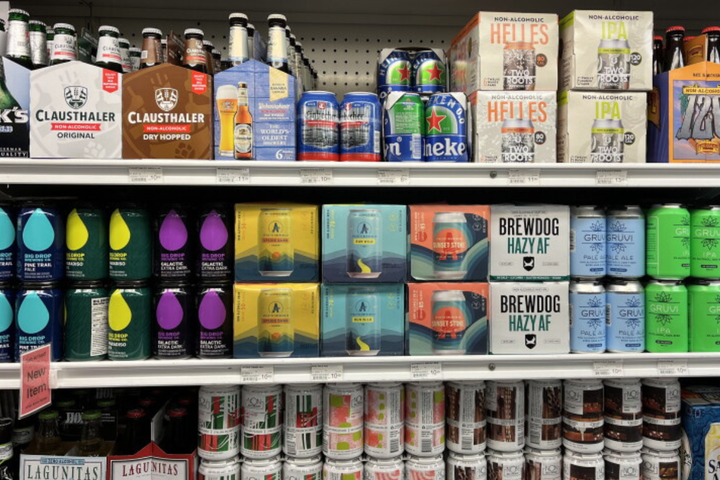
Walk into most restaurants and ask for something non-alcoholic. What you will get is one of three things: a virgin mojito that tastes like lime soda, a "signature mocktail" that is mostly cranberry and ginger ale, or a blank stare followed by "we have Coke?"
The problem is not that these drinks exist. It is that they set the ceiling. When "mocktail" is the category, the expectation stays low. Sweet, simple, something to hold while everyone else has a real drink. The word itself carries a disclaimer: this is a mock version of the real thing. A stand-in. A concession.
And for a long time, that was fine. Because nobody was really asking for more.
What Makes a Cocktail a Cocktail
A great cocktail is built on balance. Acidity, sweetness, bitterness, weight, length on the palate. These are not subjective preferences. They are structural elements, the same principles a chef uses when building a sauce or a sommelier uses when evaluating a wine.
Alcohol happens to be one of those notes. It adds weight, warmth, a certain length. But it is one note among many. When you remove it, the answer is not to replicate it. The answer is to rebalance everything else so the drink still holds together. That requires a different kind of attention.
When we created our four cocktails at No More, the starting point was never "how do we mimic a margarita without tequila." It was: what does a drink need to feel complete? What gives it weight? What keeps it interesting from the first sip to the last?
That process led us to experiment with different acids, different preparations of fresh ingredients, different ways of building body and heat. The goal was always the same: make sure every note lands. Culinary techniques typically reserved for complex sauces and reductions, applied to what ends up in your glass.
The result is a drink with structure. You can taste the layers. It evolves as it opens up. It has a finish. These are the qualities that define a cocktail, and none of them require alcohol to exist.
From absence to presence. From "without alcohol" to "with intention."
Culinary-Forward vs. Bar-Assembled
There is a reason our cocktails come from a kitchen, not a bar. They were developed through culinary process, building flavor in layers, with balance, through technique.
A mocktail is assembled. Ingredients are combined. A culinary-forward non-alcoholic cocktail is constructed. Ingredients are extracted, toasted, infused, balanced, tested, and refined until the drink earns its place on a menu. That difference shows up in the glass every single time.
Why It Matters
Language shapes expectation. When someone hears "mocktail," they expect something lesser. When they hear "non-alcoholic cocktail," at least the door is open for something real. And when they taste something that was actually built with care, with real ingredients and culinary process, the category stops feeling like a compromise.
But it works the other way too. Brands have caught on that "non-alcoholic cocktail" sounds better than "mocktail," so they put it on the label regardless of what is actually in the bottle. Juice with a better font is still juice. The language only means something if the process behind it does too.
This is not about being precious with terminology. It is about raising the floor. The non-alcoholic space is growing fast, and a lot of what is filling it is still just dressed-up juice with better branding. That does a disservice to everyone: to the people who want a drink worth their attention, and to the makers who are actually putting in the work.
Not a Substitute. Not a Workaround.
At No More, we care about this distinction because it reflects everything we believe about what drinking can be. A choice that does not require a single compromise on flavor, complexity, or experience.
We make non-alcoholic cocktails. Not mocktails. Not spirits. Just really good drinks.
Common Questions
Are mocktails non-alcoholic?
Yes. A mocktail contains no alcohol. The word simply describes a drink that mimics a cocktail without the spirit. The more useful question is whether the drink was built to be good on its own or assembled as a stand-in, which is where a mocktail and a non-alcoholic cocktail part ways.
What is the difference between a cocktail and a mocktail?
A cocktail is built around a spirit. A mocktail is usually that same recipe with the alcohol left out. A non-alcoholic cocktail is a third thing: a drink composed from the start around its own ingredients, not around the absence of one.
Are non-alcoholic cocktails the same as mocktails?
No, and the difference is the point. A mocktail references a cocktail it is not. A non-alcoholic cocktail is built for balance, depth, and flavor on its own terms. One is an imitation. The other is an original.
Is a mocktail just a cocktail without the alcohol?
That is the common definition, and it is also the problem. Take the alcohol out of a cocktail and you lose the structure, weight, and bitterness the recipe leaned on, which is why so many mocktails taste thin or sweet. A drink built without alcohol from the first step has no such gap to fill.
Why does No More Cafe avoid the word mocktail?
Because it defines a drink by what it is missing. We build culinary-forward non-alcoholic cocktails as complete drinks, not as substitutes for something else. The name sets the expectation: a drink made to be good, not a workaround.
Keep reading
A Different Way to Read Your NA Menu
Why Non-Alcoholic Drinks Cost What They Cost
What We Mean When We Say Culinary-Forward
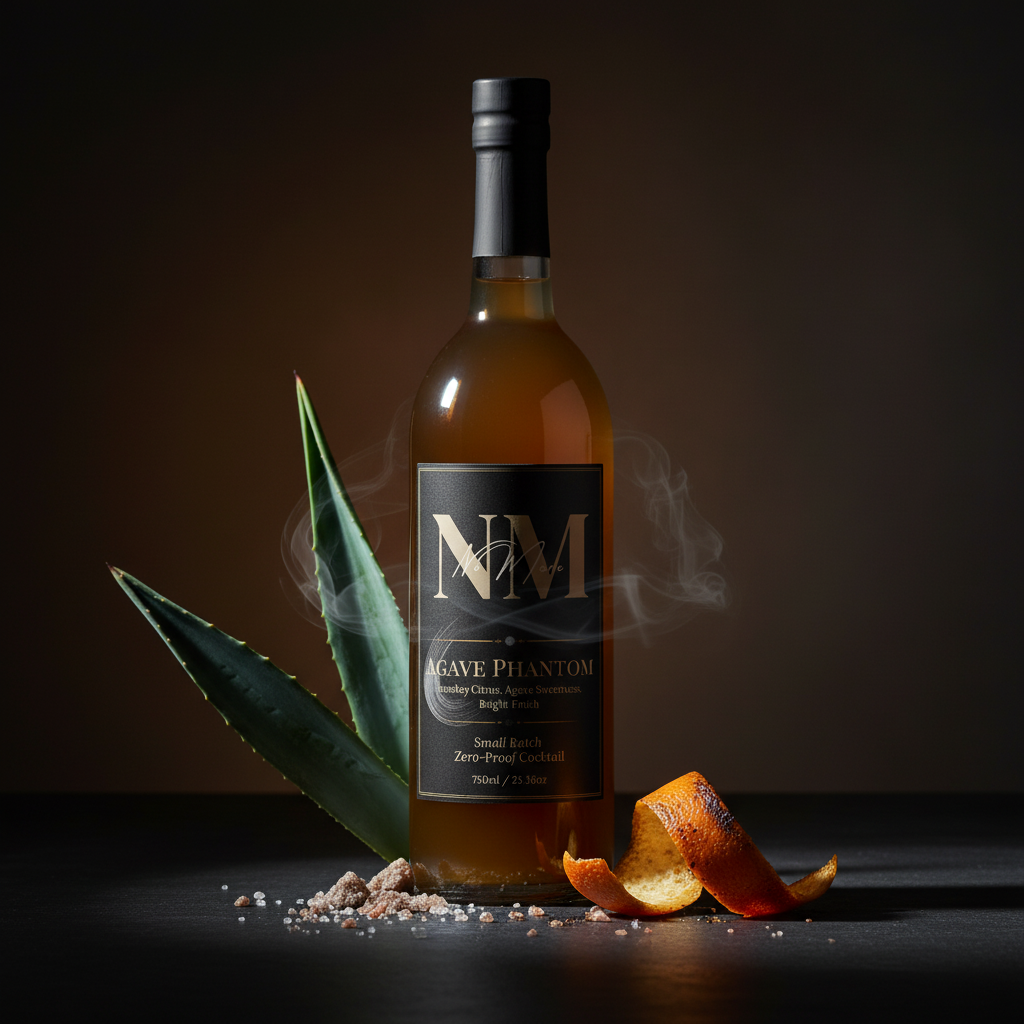
Taste the difference for yourself: try Island Echo or Amber Dream, two of our bottled non-alcoholic cocktails.