Share
The "Sober Generation" Is a Myth. They Just Found Better Drugs.
The data tells a messier story than the headlines. Here is what is actually happening.
At least once a month, we get a call from a journalist. The pitch is always the same. They are writing about the "sober movement." They want to visit a "sober bar." They want to know what it is like to serve people who do not drink.
They come in with the story already written. We are supposed to be the colorful quote in paragraph six, the part where the founder of some trendy alcohol-free spot in the East Village confirms that yes, Gen Z is choosing wellness, and yes, the future is sober, and yes, this is all very inspiring. Then they leave and publish the same piece everyone else has published. Surface-level, self-congratulatory, and wrong about almost everything that matters.
This is not that piece.
I am 40 years old. I have been in the restaurant industry for over twenty years. For about a decade of that, I was drinking over half a bottle of whiskey a day. Not socially. Not recreationally. Habitually. I was functional the entire time. Running kitchens, building businesses, outperforming most of my peers. That is the part people do not understand about heavy drinking in this industry: it does not always look like a problem from the outside. It got to the point where I was having seizures. I stopped for a couple of years. Today, I drink on occasion. It is no longer a habit. But I still enjoy it, and as a chef, I care deeply about the craft behind what goes in a glass. I am not anti-alcohol. I am not running a sobriety brand. I built a bar that happens to serve drinks without alcohol in them, and I have a perspective on what is actually happening with this generation that most of the people writing about it do not.
The Headline Everyone Loves Is Only Half True
Gen Z is drinking less. You have read it everywhere. The framing is always the same: a health-conscious generation is making better choices, rejecting the habits of their parents, and leading a mindful revolution.
Except the data does not actually say that.
According to IWSR's Bevtrac survey, the percentage of legal-drinking-age Gen Z who reported consuming alcohol in the previous six months went from 46% in 2023 to 70% in 2025. In Australia, 61% to 83%. Data from the Millennium Cohort Study shows that by age 23, 68% of Gen Z had binge-drank at least once in the past year, and regular binge drinking rates in this group have tripled since their late teens. Those rates are now higher than what millennials reported at the same age.
Read that again. The "sober generation" is binge drinking more than the generation before it.
What is actually happening is more interesting and more complicated than the headline. Gen Z is not rejecting intoxication. They are diversifying it. And the infrastructure that has always held alcohol in place as the default social lubricant is being quietly challenged, not by willpower or wellness, but by the simple fact that there are now more options on the table.
They Did Not Quit. They Switched.
In 2022, daily marijuana users in the United States outnumbered daily drinkers for the first time in recorded history. That is 17.7 million cannabis users versus 14.7 million alcohol consumers, from a Carnegie Mellon study published in Addiction. In 1992, that ratio was ten to one in favor of alcohol. It completely inverted in thirty years.
Among 18 to 24 year olds, 69% now say they prefer cannabis to alcohol, and 56% report having actively replaced drinking with weed. Hallucinogen use in this group hit its highest point since 1988. Psilocybin, MDMA, and ketamine are showing up not as party drugs but as tools for what younger users describe as emotional regulation and self-exploration.
The nicotine market tells the exact same story from a different angle. Only 1.1% of American youth smoke cigarettes today. That number sounds like a public health victory until you learn that vaping among 18 to 24 year olds tripled from 9% to 29% between 2021 and 2024. They did not quit nicotine. They changed the delivery system.
This is the pattern nobody in the beverage industry wants to name directly: Gen Z did not eliminate the desire for altered states or social lubrication. They just have more ways to get there now. Twenty years ago, if you wanted to loosen up, unwind, or bond with people, alcohol was essentially the only legal, socially acceptable, widely available option. Today, you can buy weed at the corner in most major cities. THC beverages are a projected $2.8 billion market. Mushroom bars are opening. Kratom cafes exist. The supply side changed, and consumption patterns followed.

The Operating System Nobody Wants to Acknowledge
Drinking is not just a habit. It is the operating system that runs adult social life.
First dates happen at bars. Coworkers bond at happy hour. Client relationships develop over dinner where wine is poured before anyone even opens a menu. Promotions do not go to the person with the best spreadsheet. They go to the person who showed up on Thursday night and built a rapport with leadership over a couple of rounds.
Research from the Journal of Economic Behavior & Organization found that CEOs in strong drinking cultures have measurably more social connections. That effect, by the way, only held for men.
Academics have a term for this: "liquid social capital." It describes the way alcohol serves as a gateway to the informal networks where real power and real relationships are built. Thirty-eight percent of employees aged 18 to 24 report feeling pressured to drink at work events. The system does not require drinking through any policy. It requires it through access. Access to conversations, relationships, and opportunities that shape the trajectory of a career.
The sociologist Ray Oldenburg described "Third Places," the public spaces beyond home and work where people gather voluntarily and informally. In most American cities, the dominant third place is a bar. The entire physical infrastructure of socializing is built around alcohol. That infrastructure does not care about your intentions. It does not care that you downloaded a sobriety app or did a Dry January challenge. It just sits there, available, convenient, and deeply embedded in how every generation before this one learned to connect with other people.
The trend does not die because people stop wanting alternatives. It dies because the infrastructure to support those alternatives was never built.
The Part Where We Have to Be Honest About Sobriety
I want to be careful here because this matters to me personally.
When someone walks into No More Cafe and tells us they are celebrating a sobriety milestone, that means something. We see it regularly. Those people fought for their lives, and the discipline it takes to stay sober in a world that is structurally designed around drinking is extraordinary. Nothing I am about to say is directed at them.
But there is a difference between someone who had a real problem and did the hard work to come out the other side, and a 21 year old who never really developed a drinking habit posting on Instagram about how they "don't drink." That is not a lifestyle change. That is describing a default. It is like someone who has never owned a car calling themselves "car-free." The announcement carries the weight of a decision that was never actually made.
The sober curious movement has been criticized from within the recovery community for this exact dynamic. When sobriety becomes an Instagram identity, a wellness aesthetic that requires expensive botanical spirits and paid coaching subscriptions, it stops being a public health story and becomes a class performance. The carefully curated "sober life" content can feel, to people for whom sobriety is a daily act of survival, like someone wearing their struggle as a fashion statement.
And the data supports the disconnect. Participation in monthlong abstinence events like Dry January actually fell among Gen Z between 2024 and 2025. The performance of not drinking is declining even while the cultural conversation about not drinking gets louder. That gap between what people say and what people do is what researchers call the "intention-behavior gap," and it is wide enough to drive a truck through.

What Happens If Nobody Builds Anything
This is the question that keeps me up at night, because I have a real stake in the answer.
Behavioral science uses a model called COM-B: Capability, Opportunity, Motivation. For any behavior change to stick, all three need to be present. You can have all the motivation in the world to drink less. You can understand the health benefits, have the discipline, fully believe in the choice. But without opportunity, meaning a physical environment that supports the behavior, the change does not last. Studies show that people with more sources of what researchers call "alcohol-free reinforcement" are significantly less likely to relapse. People whose social lives are entirely built around alcohol-involved settings consistently return to drinking, even after treatment.
This is not abstract for me. I see it play out every week. Someone discovers No More, comes in a few times, starts building it into their routine. They have a place to bring a date that is not a bar. A place to meet a coworker after work that does not center on a drink menu. A place where the thing in their hand feels intentional, not like a compromise. That is the behavior change holding, because the environment supports it.
Now imagine that place does not exist. Imagine the only options on a Friday night are the same bars, the same wine lists, the same happy hour specials. Where does that person go? They go back. Not because they failed, but because the path of least resistance always wins when the infrastructure does not change. The trend dies. Not because people stopped wanting something different, but because nobody gave them somewhere to actually live that choice.

What It Looks Like When the Space Exists
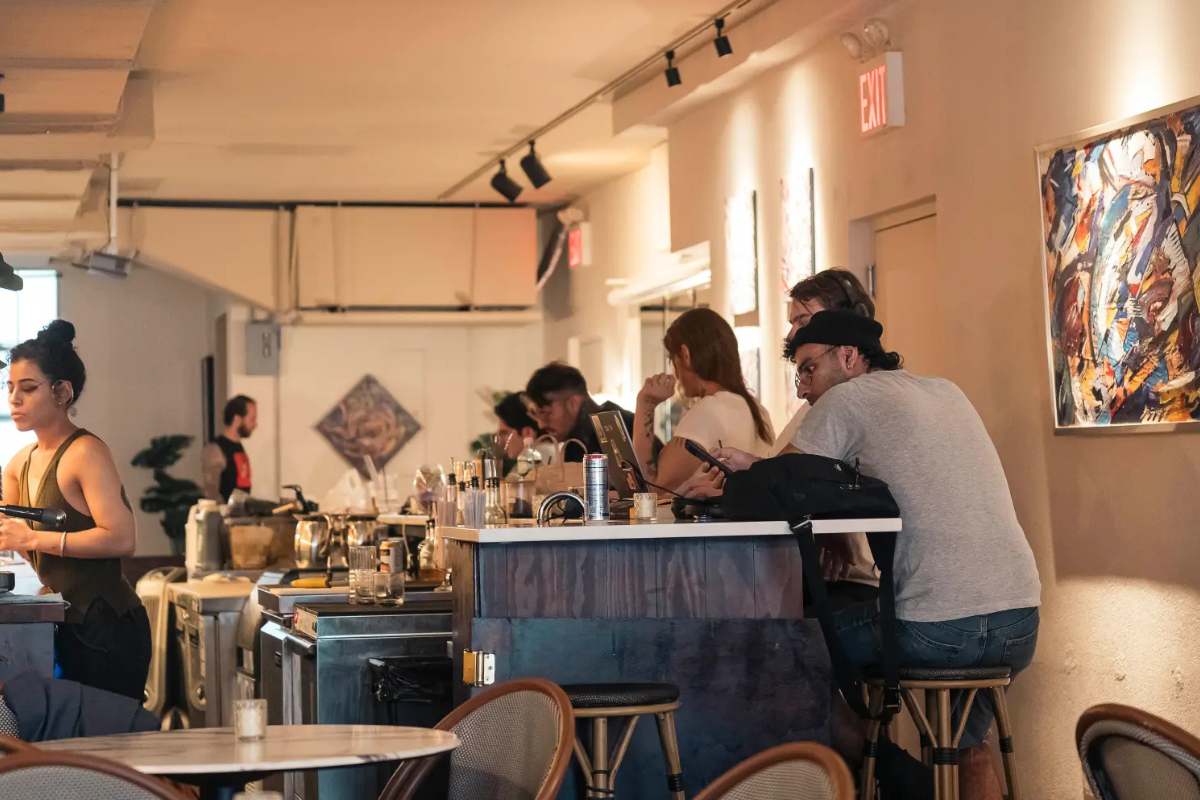
I run a bar in the East Village that does not serve alcohol. It is not a sober bar. It is not a wellness concept. It is a place where adults go out.
Some of the people who sit at our bar are in recovery. Some just do not feel like drinking on a Tuesday. Some are pregnant. Some are on medication. Some just like the drinks. It does not matter, and we do not ask.
The cocktails we make are not designed to mimic alcoholic drinks or trick anyone into thinking they are having one. They are just drinks. Built with real ingredients, balanced with intention, meant to be the thing you actually want to order.
Gen Z is not fundamentally different from any generation before it. They want connection. They want social bonding. They want to go out and have a good time. The substances they reach for might be shifting, but the need underneath is exactly the same. The question is whether the spaces exist to support the way they want to live, or whether they eventually drift back to the only system currently available because it was just easier.
From where I sit, behind the bar most nights, I can tell you what happens when the infrastructure exists. People show up. They do not need to be convinced or educated or sold on a lifestyle. They just need somewhere to go.
More Places Need to Open. But They Need to Be Normal.
I have met other owners in this space who see new NA venues as competition. I think that is a ridiculous way to look at it. One bar in the East Village does not solve an infrastructure problem. You need dozens of these places in every city for the alternative to feel accessible and ordinary. The bigger the network gets, the better it is for everyone in it.
But here is the problem. A lot of the places that do open make not drinking feel like joining a religion. You walk in looking for a drink on a Tuesday night and suddenly you are surrounded by crystal displays, zodiac-themed menus, breathwork events, and incense burning to cleanse something. The message, whether they intend it or not, is that choosing not to drink tonight means choosing an entire lifestyle. Waking up at 5am for pilates. CrossFit in the afternoon. A running club. Tarot cards. Caring deeply about whether you are a Sagittarius or a Libra.
For the person who genuinely connects with that world, great. But for the majority of people who just do not feel like having a drink tonight, that environment is alienating. It says this is not for you unless you are willing to become a different person first. And when the "alternative" to a regular bar requires an identity overhaul, most people will just go to the regular bar. Not because they wanted to drink, but because drinking was easier than being weird about not drinking.
That is how the movement kills itself. Not from the outside, but from the inside, by making the tent so specific that normal people do not see themselves in it. If the NA space wants to become real infrastructure and not just a niche for a certain kind of wellness-oriented consumer, the places that open need to feel like places. Bars. Cafes. Spots where you sit down and have a good time. Not programs. Not communities built around the shared identity of not doing something. Just somewhere to go.
They Just Need Somewhere to Go
No More Cafe. 352 E 13th Street. East Village. Open daily, noon to midnight.
More on the shift we are part of: the New York Post on NYC’s alcohol-free movement.