Share
What We Mean When We Say Culinary-Forward
We don't remove alcohol from anything. We build drinks the way a kitchen builds sauces.
Every week, brand reps show up at the cafe with pitch decks. They've got proprietary technology, breakthrough dealcoholization processes, brand new extraction methods they're very excited about. The decks are impressive. Lots of R&D. Lots of science. Then we taste the product.
Flat. Every time. The worst possible version of whatever they're trying to mimic.
The problem isn't the technology. The problem is the starting point. If you begin with alcohol and work backward, you end up with a lesser version of something that already exists. You're fighting physics. You're chasing a ghost. The drink was never designed to work that way.
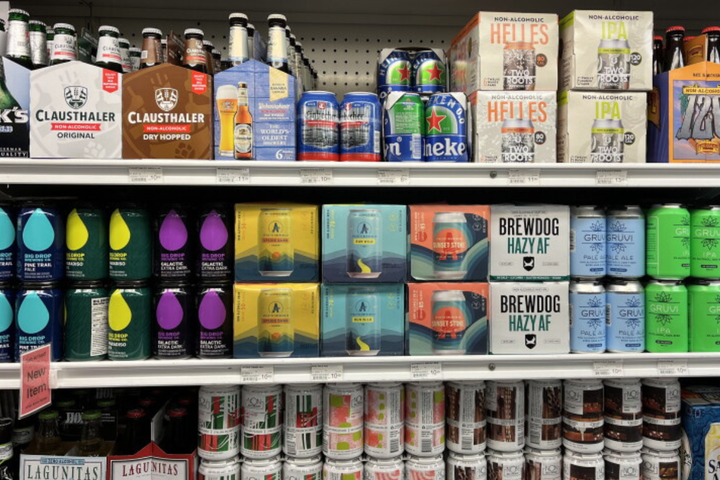
The one category that's gotten close is beer. Non-alcoholic beer has come a long way from O'Doul's. But beer is also a different math problem. You're removing 5% alcohol, not 30 or 40 or 50. The less you have to strip out, the more of the original character survives. When you're trying to dealcoholize a spirit or a wine, the damage is exponentially worse. And most brands are still starting from that losing position.
This is the fundamental mistake the industry keeps making. They're so focused on what they're removing that they never ask what they're building.
Reverse Engineering What a Drink Is Supposed to Do
We didn't start by trying to replicate existing cocktails. We asked a different question: what does a great drink actually do?
The texture. The weight on your palate. The intensity. The way it develops as you drink it. The finish. The clarity or richness of each flavor layer. The fact that you want another sip instead of setting it down.
Then we worked backward from those outcomes.
In a professional kitchen, sauce is possibly the most important station. It takes time. It takes care. It takes layered technique. A great sauce isn't just flavored liquid. It's a structure built through reduction, emulsification, extraction, balance. That's our approach. We're making sauces, not mixing drinks. Same precision. Same respect for the process.
The difference matters. When you start from 'how do we make a non-alcoholic drink,' you're already building downward. You're designing a compromise. When you start from 'what are the actual techniques that create the drinking experience we want,' you're building upward. You're designing something.
What Didn't Work
We tested everything. Clarification looked genuinely promising at the start. Agar clarification. Milk clarification. The drinks came out beautiful. Crystal clear. Perfect visual. Then you'd drink it and realize the process had stripped something fundamental out. The clarity wasn't elegance. It was emptiness.
On top of that, the volume loss was brutal. You'd start with a liter and end up with maybe 600 milliliters after the clarification process ran its course. And it took forever to scale. We spent weeks on it. Then we dropped it.
This is not a marketing exercise. We tested, we cut, we moved on. That's the whole ethic here. We're not married to techniques. We're married to results.
Maceration and Sous Vide
Two techniques run through everything we make. Both of them are about extraction. About pulling the most flavor and character out of an ingredient without destroying it in the process.
All fresh citrus gets macerated overnight. Cold. No heat. The acid in the fruit gradually breaks down the cell walls. You get more than just juice. You get the tannins, the aromatic compounds that live in the pulp and flesh, the depth that comes from a slow, patient extraction. It changes the texture. It changes everything. It's completely different from juicing and mixing.
Then everything goes into sous vide with glycerin.
Temperature control is the whole game here. Heat lets the solvent penetrate deeper into the plant tissue and pull out more flavor. But too much heat and you're burning off the delicate top notes. The brightness. The aromatics that make an ingredient smell like itself. Sous vide lets you work at precise temperatures for hours. Delicate botanicals stay low. Dense roots and bark go higher. You extract what you need without destroying the rest.
Glycerin is doing double duty. It extracts compounds that water alone can't reach, pulling flavor from both the water-soluble and oil-soluble sides of the ingredient. And it provides the body. The weight. The smooth texture that makes the drink feel substantial without relying on sugar or alcohol to get there.
This is where most of the work actually happens. Not in the mixing. In the preparation.
Char, Smoke, Caramel, Fire
Once you've got your extracted base, you solve for the specific problem each drink presents.
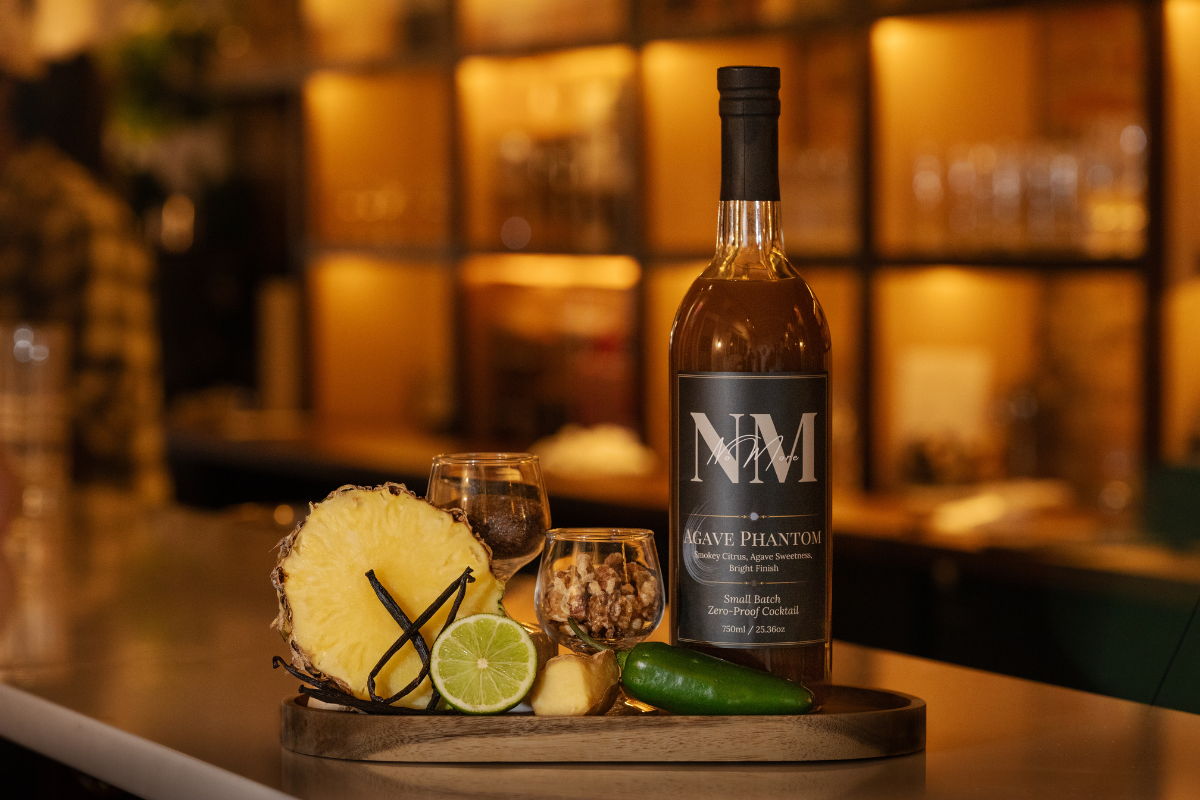
Take the Agave Phantom. Jalapeno and pineapple. Raw heat. Simple fruit sweetness. Those aren't interesting by themselves. So we char the jalapeno and pineapple first. The char transforms that raw heat and sweetness into something deeper, more complex. Then cold smoke. Wood smoke contains hundreds of flavor compounds that provide the dark, earthy base notes a drink like this needs. And because the base is glycerin-rich, the smoke integrates completely rather than sitting on top.
The Amber Dream is built on a brown sugar caramel. But not caramel as sweetener. Caramel as structure. When you cook sugar past a certain point, it stops being sugar. It breaks down into entirely new flavor compounds. Toffee. Roast. Warmth. Bitterness at the edges. Those are the notes that make the drink taste developed, that give it the feeling of something that's been built over time. People are scared of sugar. We use it for a purpose, and the purpose isn't sweetness.
Burnt Sugar and Vinegar
Visions of Ruby is a different problem entirely. We need grip. Dryness. A structural sensation that makes the drink sippable instead of just sweet and drinkable. So we start with burnt sugar. Actual burnt sugar. Raw sugar cooked past the point any pastry chef would throw it out. That controlled burn is exactly what gives us the harsh, tannic quality we're looking for. Once the sugar hits that point, red wine vinegar goes in and the whole thing reduces down to a gastrique consistency. That's your structure. That's what makes the drink tense enough to want another sip.
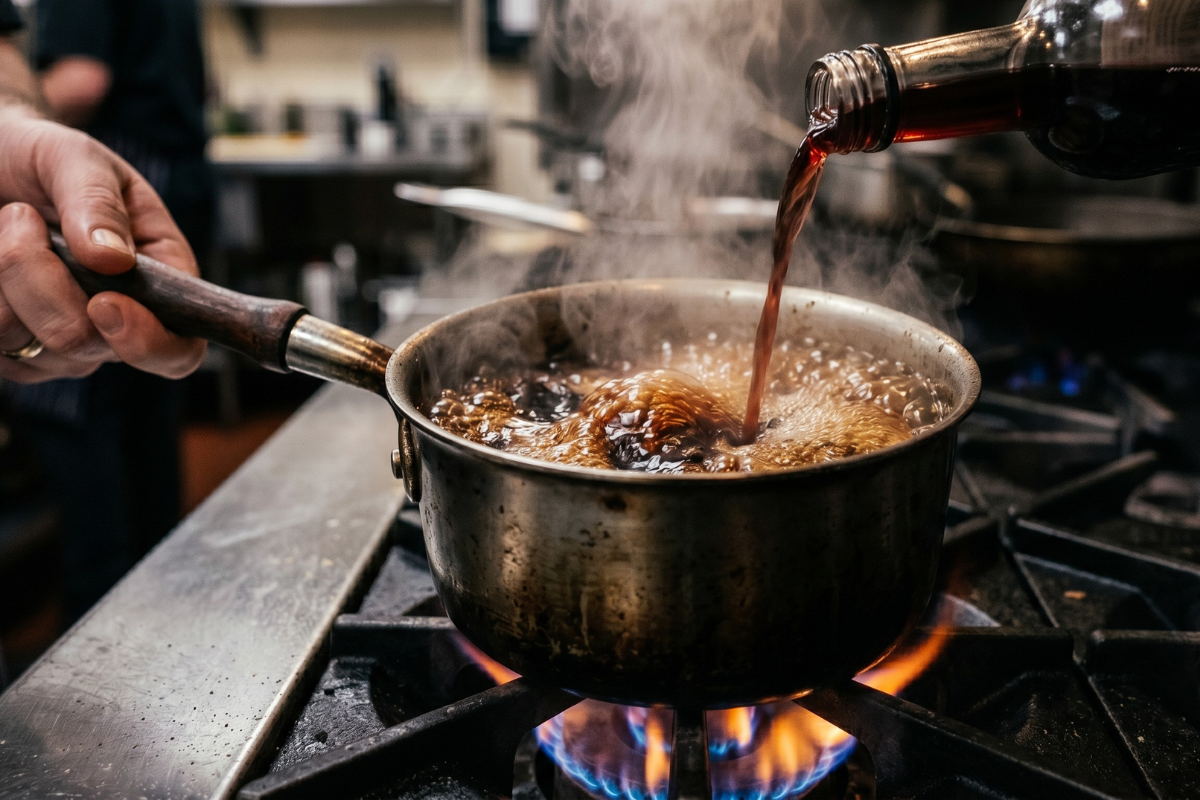
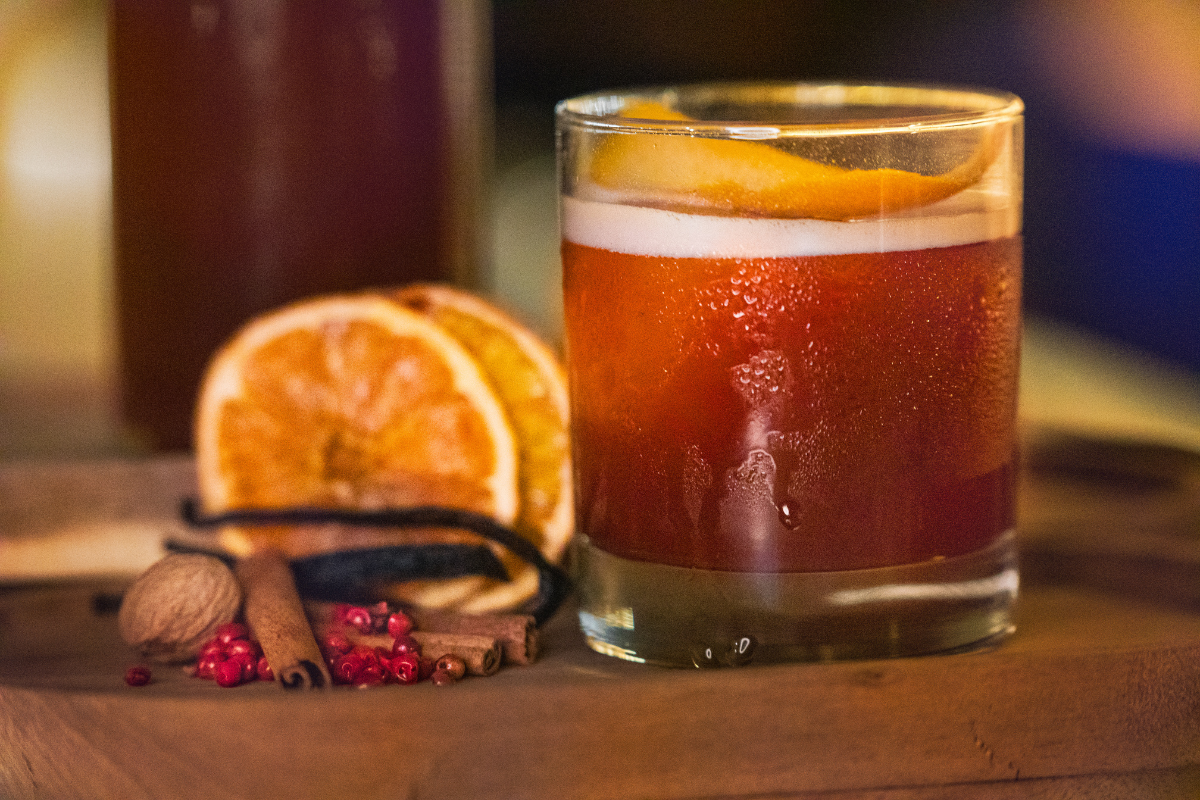
Every technique exists because it solves a specific problem. Because the drink needs it.
In a professional kitchen, sauce is possibly the most important station. It takes time. It takes care. It takes layered technique. That's our approach. We're making sauces, not mixing drinks.
The Finishing Spray
When you order one of our cocktails at the cafe, it gets a fine mist of herb tincture right before it reaches you. Dried herbs reduced in glycerin, left to sit for a couple of weeks, concentrated down. One tiny spray. That's it.
It adds a subtle layer of aroma, something extra you notice when you bring the glass to your mouth. Not a different drink. Just a little more depth.
Glycerin holds aromatics in a way that water can't. More stable. Longer lasting. And the surface application matters. A spray on top stays concentrated right where you need it instead of disappearing into the liquid. It hits you the moment you lift the glass.
It's a small detail. It's also the only difference between the bottled version you can order online and the version you get at 352 E 13th.

What's in the Glass
We don't spend time talking about what's not in the glass. We spend time building what is. Every bottle is the result of kitchen work. Real technique. Real extraction. Real transformation of raw ingredients into something that didn't exist before. Not a chemistry experiment trying to mimic something that already exists. Not a brand looking to own a category or hit a trend. Just work. That's what culinary-forward means.