Share
Zebra Striping Only Works If You Were Never Really Drinking
The most-quoted drinking trend of 2026 has a quiet condition nobody is naming.
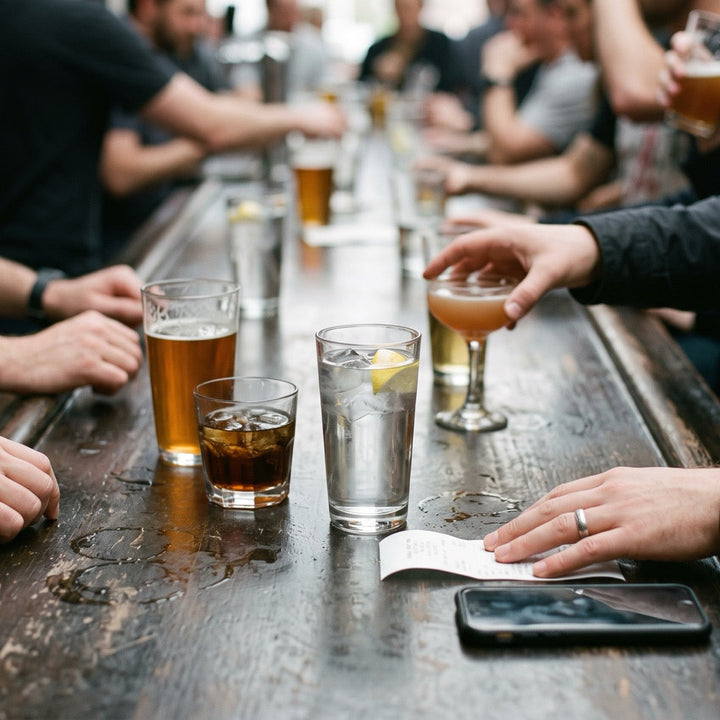
Zebra striping is the term every drinks brand is leaning on this year. Alternate a real drink with a non-alcoholic one, then go back. The data says 47 percent of US bar visitors already do it, that 78 percent of UK 18-to-24 year olds mix non-alcoholic rounds into a single outing, and that 93 percent of people who buy non-alcoholic drinks also buy alcohol. The numbers are real. The framing on top of them is not.
Zebra striping is two completely different stories sitting on top of one another. One of them works. The other one is a marketing fantasy. The line between the two comes down to a single question, and almost nobody in the trade press is willing to ask it out loud. Did the person doing the alternating actually taste their drinks in the first place?
The Beer Story Works
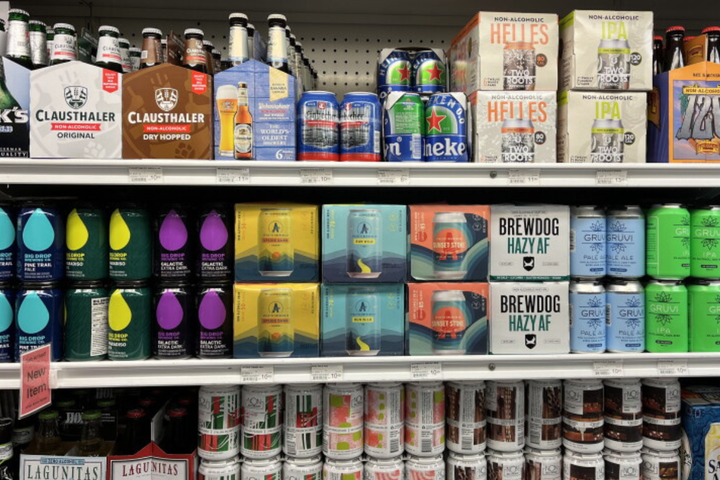
Zebra striping for beer is real, and it works for the obvious reason. Non-alcoholic beer caught up. Athletic, Heineken 0.0, Guinness 0.0, the bar has moved. Just as importantly, the beer occasion is forgiving. People order beer for refreshment, for quantity, for the social object in their hand for the next two hours. None of that is broken when one of the rounds happens to be alcohol-free. Two pints, then an NA pint, then two more pints. Five drinks across the night, only a couple with alcohol, and the experience held.
This is the version of zebra striping the trade press is right about. The behavior grew because the product grew. KAM and Lucky Saint reported that 1 in 3 UK pub visits are now entirely alcohol-free. That number is not fiction.

The Wine and Cocktail Problem
Wine and cocktails are a different category, and almost nobody is willing to say so out loud. The reason is uncomfortable. Zebra striping for wine and cocktails works only for people who never really cared about what they were drinking in the first place.
Think about who buys a bottle of Yellowtail at a bodega, or pours from a box of pinot grigio at a party. Those drinkers were not tasting. They were drinking to get a buzz, to fit the room, to have a glass in their hand because the moment expected one. For them, an NA round mid-session is no compromise. Whatever was in the glass before was already not the point. The non-alcoholic version hits the same buttons because those were the only buttons in play.
Zebra striping for cocktails only works for the people who never really cared about what they were drinking in the first place.
If You Care, You Cannot Substitute
For the person who actually tastes their wine, the person who would refuse a bad bottle even when it is free, the math doesn't work the same way. You cannot pour a great glass of red, then a dealcoholized substitute, then back to a great glass of red, and pretend the session held. The compromised round contaminates the good ones. You retune your palate down, then ask it to climb back up. It doesn't, not cleanly.
Think about pizza. Eat a slice of really good pizza, then a slice of microwave gas-station pizza, then go back to the good slice. The macros are the same. The calories are roughly the same. Both are pizza. But nobody who actually cares about pizza is going to do that, because the bad slice doesn't just fail to satisfy. It actively retunes your palate. By the time you come back to the good pizza, you have broken your own meal.
You cannot move freely between good and bad. The bad round tells you what you are missing in the good ones. What you can do is move freely between good and good. Different good. That's a different problem entirely, and it's the one that opens the door to what non-alcoholic should actually be.
What Non-Alcoholic Should Actually Be
There is a version of non-alcoholic that does work for people who care, and it requires letting go of the substitution frame entirely. A non-alcoholic drink is not a stand-in for a wine you love. It is a different thing, ordered for different reasons, and satisfying in a different way.
Think about steak and oysters. Both are peak adult dinner moves. Neither is a stand-in for the other. You don't order oysters because the steak is unavailable. You order oysters because oysters are what you want in that moment. The same logic applies to a drink that happens to have no alcohol in it. It is its own ritual, its own pleasure, its own reason to be at the table.
This is the version we have been building toward at No More. We make our cocktails the way we do because we are not trying to fool anyone into thinking they are drinking something else. We are making a real drink for the moment when you happen not to be drinking. Sometimes that is because you are driving. Sometimes you are pregnant. Sometimes you just want to wake up tomorrow without losing the morning. None of those are sober-curious lifestyle moments. They are normal adult moments, and a thoughtful drink belongs in them.
The Real Question Isn't About Substitution
It is whether the drink you ordered is worth ordering on its own terms. Zebra striping is a useful conversation if it pushes more bars to take their non-alcoholic options seriously. It is a useless one if it convinces drinkers that any cold liquid in the right glass is the same as the bottle they were enjoying twenty minutes ago.
The trend is real. So is the line that separates the people the trend works for from the people it does not.