Share
Kava Explained: The Drink Is Legal. The Room Is Not.
What it is, why it was built to be shared, and how a plant people have passed around a circle for three thousand years ended up with no legal home in America
The substance is legal. The gathering is not. Out of everything kava is, the one part being regulated out of existence is the part where you sit down with other people.
Nobody is sitting alone in a basement working through a case of it. The effect is too mild and the world is full of faster ways to get numb if that is what you actually want. Kava asks you to wait half an hour for a cup of something you had to learn to like. The only reason anyone takes that deal is the people they are waiting with.
Not the extract. Not the can. Not the powder in the mail. The room. The room is what the rules reach, because the room has an address and a license and a health inspector, and a can moving through a warehouse does not. We did not decide the substance was dangerous. We decided the gathering was easier to find.
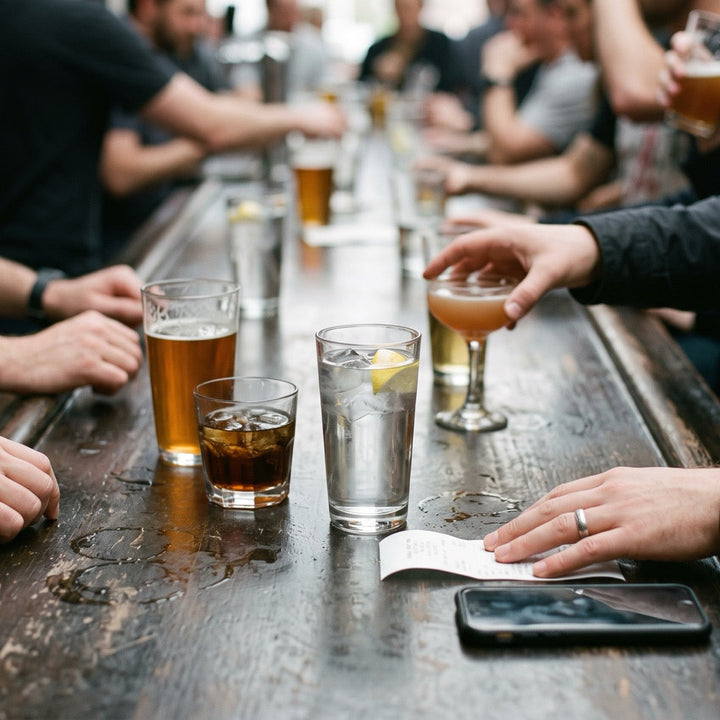
And look at when we decided it. Half of Americans say they are trying to drink less. A third of the people who already stopped say they feel judged for standing in a bar holding a soda. People are hunting for connection, for somewhere to be at nine on a Thursday that is not built around alcohol. That hunger has never been louder. This is the moment we picked.
Here is how that happened.
What kava actually is
Kava is the root of a pepper relative called Piper methysticum, grown across the South Pacific. You grind it, mix it with cold water, and strain it. Cold water, never hot. What comes out is cloudy, bitter, and often compared to muddy water, which is generous.
The active compounds are kavalactones, and they work on the same receptor system that governs sedation. The effect is mild and physical. Your mouth goes numb for a minute. Your shoulders drop. Conversation gets easier. That is the whole event.
It tastes bad the first time. It tastes bad the second time. Then somewhere in there you stop flinching, and eventually you might catch yourself wanting it. That is an acquired taste, not a defect, and it is how most of what adults drink socially has always worked.
Which is the first clue about what kava is. Nobody acquires a taste alone. You acquire it sitting next to people who already have it.
It was never about the drug
Kava was domesticated in northern Vanuatu roughly three thousand years ago, and people bred it so thoroughly that it lost the ability to reproduce on its own. Every kava plant alive today was propagated by hand and carried by somebody to where it grows now. It spread across the Pacific because people took it with them.
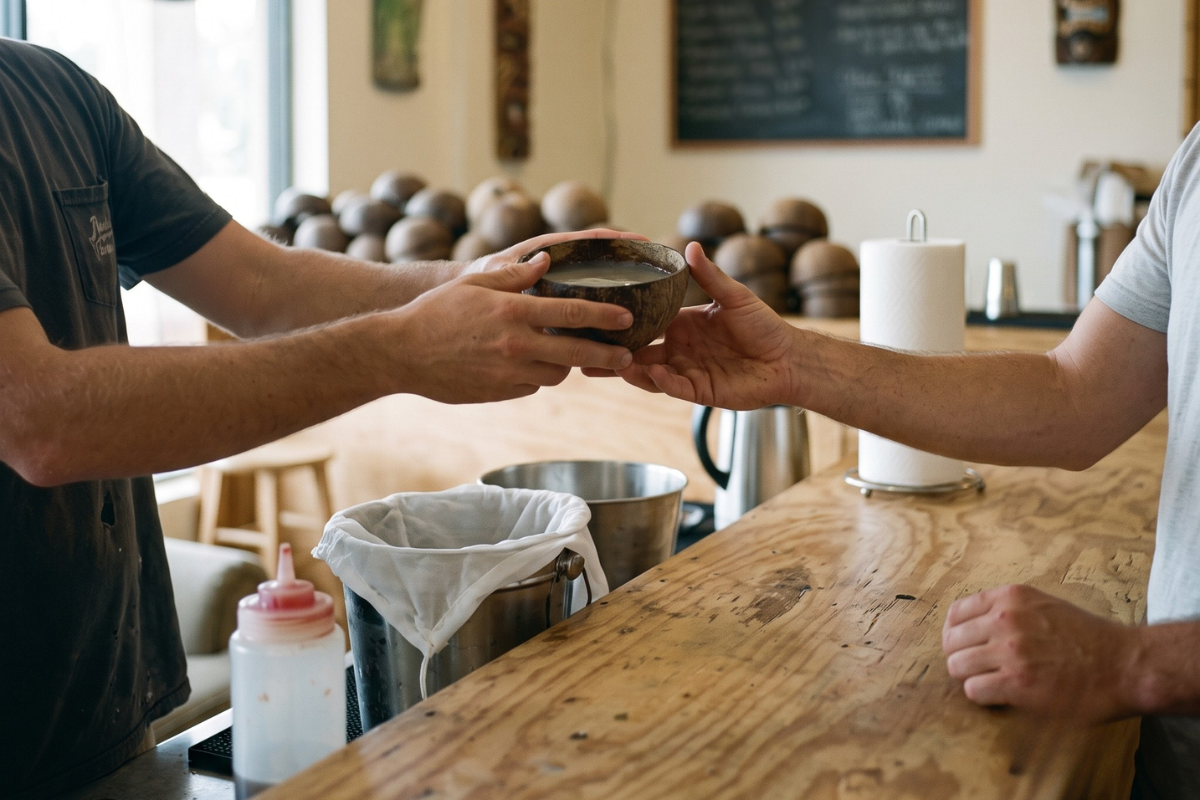
Then look at how it is served. The root is prepared in a large carved wooden bowl and poured into a coconut shell cup. One bowl, one cup, passed around a circle, and the whole thing takes twenty or thirty minutes before anyone drinks anything.
In Vanuatu the building it happens in is the nakamal, the community meeting house. In Tonga the gathering has its own name, faikava, and that is the detail that gives the game away. The word is not for the drink. The word is for the group of people drinking it.
You do not build a ceremony around a mild sedative. You build a mild sedative into a ceremony. The drink was always the excuse, and the excuse worked for three thousand years. Asked why they drink it, Tongan men in one study said socialising and preserving their culture, in that order. Nobody was chasing a buzz. They were showing up.
You do not build a ceremony around a mild sedative. You build a mild sedative into a ceremony.
How it got here, and what America did with it
Kava reached the mainland quietly, carried by Pacific Islander families doing what they had always done with it. Then in the late 1990s the supplement industry found it, and America did what America does with a plant. It put it in a capsule and sold it for anxiety.
That version lasted five years. In March 2002 the FDA tied kava supplements to severe liver injury, following a couple dozen reports overseas. The agency noted in the same breath that such damage appeared to be rare. It did not matter. The UK banned kava outright that year and has not lifted it. The category collapsed.
Here is the part that got buried. Solvents pull two to ten times the kavalactones that cold water does, and the European liver cases were overwhelmingly about those extracts, not about the bowl. The World Health Organization reviewed it again and found the traditional water-based drink carries an acceptably low level of risk. The slow shared version was the safe one all along.
And then the interesting thing happened. The pill died in 2002, and the first American kava bars opened in Florida the same year. Kava did not come back to this country as a supplement. It came back as a room.
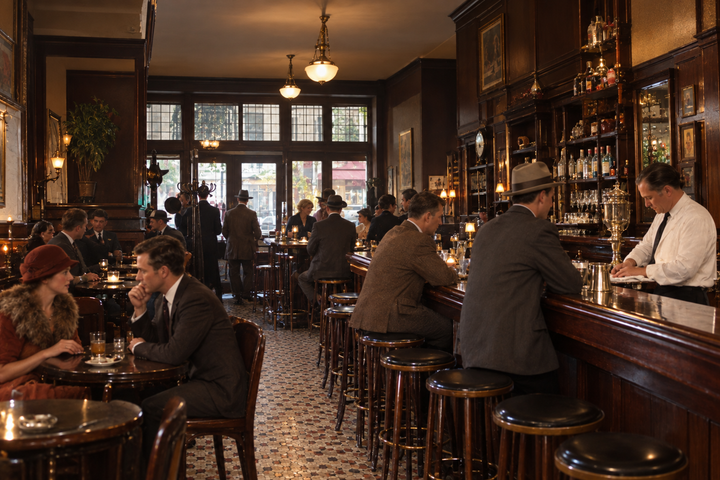
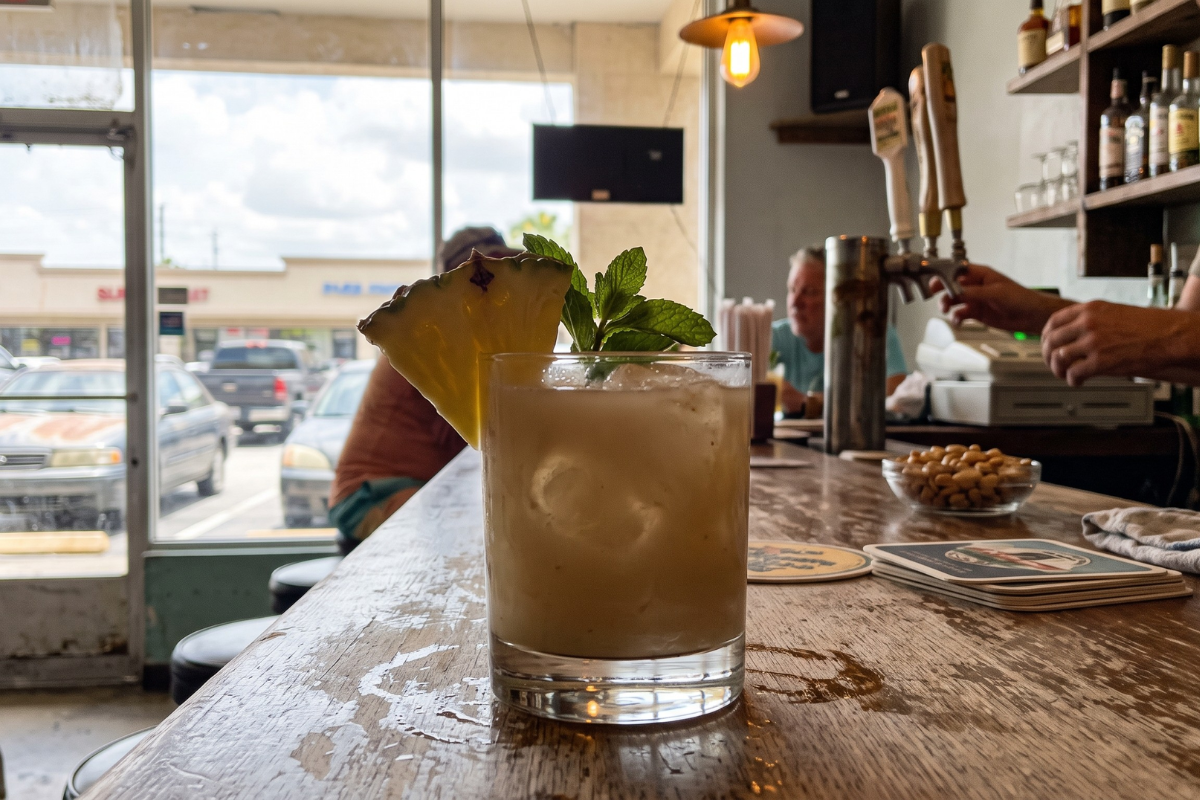
There are over three hundred kava bars in the country now, though nobody keeps a real count. Go into one and it is dim, a bit shabby, laptops open, mostly people between twenty and forty, someone behind the counter taking twenty minutes to make the next batch by hand. One owner told a reporter they just wanted a place where everyone feels welcome.
That is not a drug market. That is a bar with the alcohol taken out and the waiting left in.
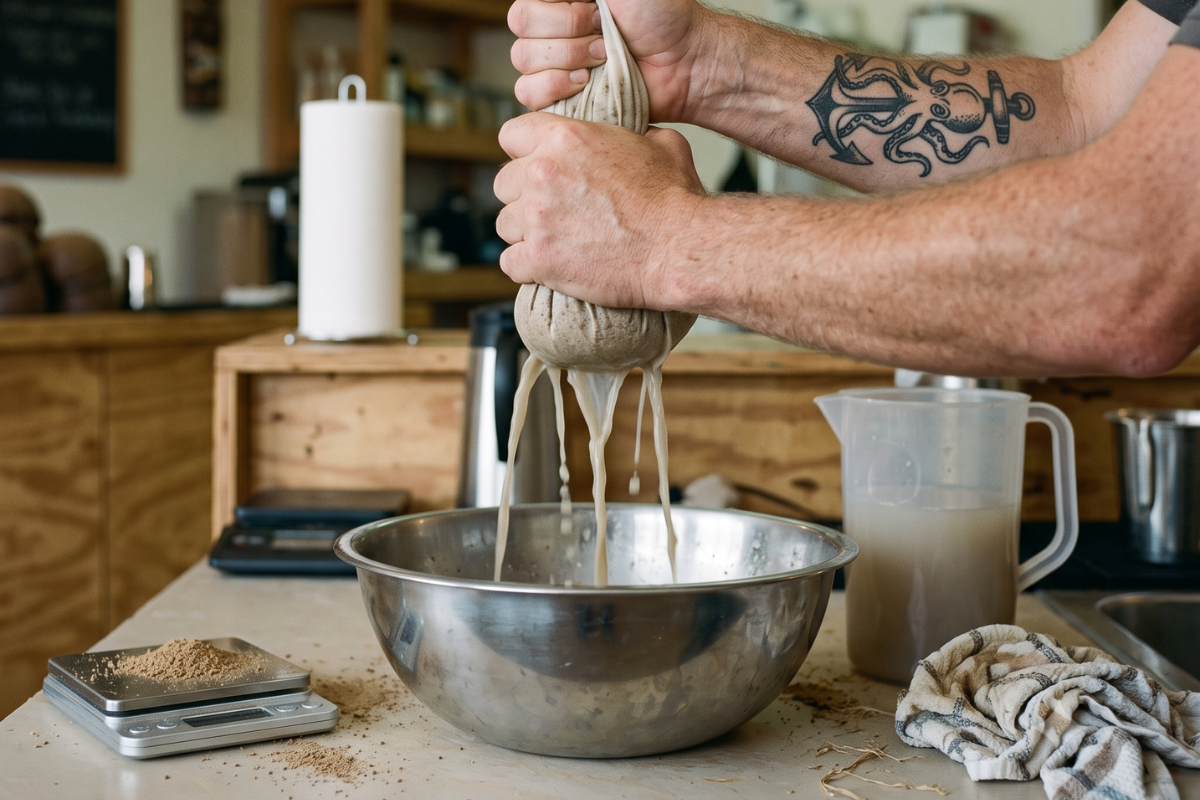
Twenty minutes, by hand
Grinding the root, working it through the water, straining it, filling the cup. Nobody ever sped it up, because speeding it up leaves you in a room with strangers and nothing to do.
The waiting is not in the way of the thing. The waiting is the thing.
Where it is actually legal
Kava is not a controlled substance. You can buy it, own it, and drink it in all fifty states, and no state bans the plant. Sealed in a package as a supplement, it has been lawful since 1994.
Now the part nobody writes down. There is no state where a kava bar is clearly, affirmatively legal. Not one.
Two states have looked hard and come down on kava's side. Hawaii's health department determined in January 2024 that noble kava root prepared with water is generally recognized as safe, citing a 1948 ethnobotany, old Sears catalogs, and Mark Twain writing about the stuff in 1866. California quietly rewrote its guidance in January of this year to say kava steeped in only water is not a food additive at all.
Read both closely, because they stop at the same place. Water only. Los Angeles County spelled out what that means in February: anything else gets red-tagged or impounded. And most American kava bars do not sell root and water. They sell it blended with pineapple juice, coconut milk, chocolate. Every one of those drinks is impoundable in the friendliest kava state in the country. What got protected was the ceremony. The business did not.
Four states restrict it outright, plus two cities. Then there are the other forty-four, where nobody has decided anything at all. That includes Florida, which has more kava bars than anywhere else in America. Not legal. Not illegal. Unexamined.
So that is what those three hundred rooms are running on. Not permission. Nobody has looked.
The gathering was never banned. It was never permitted either. Somebody sent a memo.
How the rules actually get made
And when somebody does look, it does not happen in a legislature. No debate, no vote.
Denver's health department sent a memo to its inspectors in 2019 saying retail businesses shall not use kava as an ingredient in food or beverages, three years before New York became the story everyone covers. Arizona sent a nearly identical letter to every county health department in the state and revised it again this February, closing on-premise kava in one of the largest kava markets in the country. It got no coverage at all. New York never published its statewide position as a regulation in the first place. It is an unpublished determination enforced through county permit renewals, and an upstate kava lounge that built ninety percent of its revenue on the drink lost the argument without ever getting to have it.
None of it went through public comment. None of it is searchable in a legal database. Nobody voted, and the people it closed never got to make a case.
The courts are no better. A federal judge upheld New York City's ban in August 2025, reasoning that steeping the root changes water from H2O into a liquid containing kavalactones. Add kava to water and you have not made a cup of kava. You have adulterated the water. An appeals judge hearing an earlier round said what most people think. This is very metaphysical to me.
The mechanism cuts both ways, which is the real tell. California did not legalize anything either. A health department edited a webpage in January, and that one edit did more for kava in this country than two years of federal litigation. The same authority drew New York's line on non-alcoholic beer by memo, which is why you get carded for a 0.4 percent beer.
Meanwhile, in a can
While all of that gets worked out, the fastest growing version of kava has skipped the question entirely.
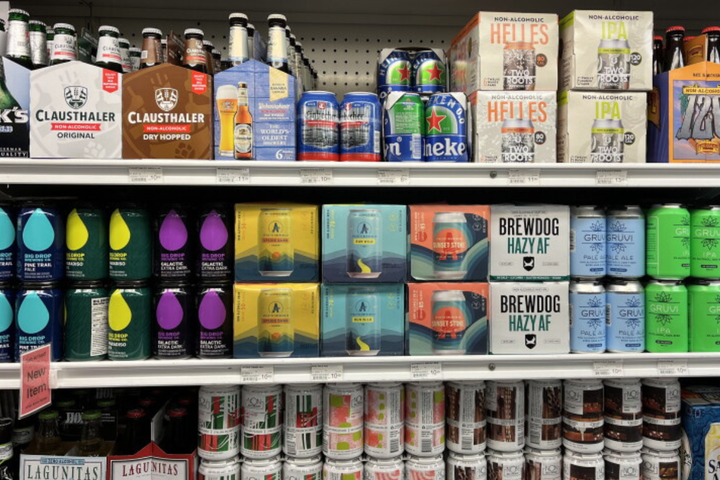
Canned kava is a real category now, in national distribution, in airports and train stations and on Amazon. It is built on kava extract with other functional ingredients stacked on top. Several were reformulated specifically to strip out kava's taste, and they arrive in flavors engineered to remind you of cocktails. The marketing points straight at the person cutting back on drinking, which tells you who the category thinks it is for.
Look at what got engineered out. The bitterness, because bitterness is a defect now. The twenty minute wait, because waiting is friction. The bowl, because a bowl needs other people, and other people do not scale. What is left is a can you buy at a gate and drink by yourself.
The kavalactone content, the one number that would tell you what you are drinking, is disclosed inconsistently across the category. The version called unsafe is the only one where somebody can tell you what is in the cup.
Not one state has moved against the can.
A substance, or an activity
Look at kava as a drug and it is legal in all fifty states. Look at the same kava as something people do together and it is legal nowhere.
Here is the whole thing in one line. Look at kava as a substance and it is legal in all fifty states. Look at the same kava as a social activity and it is legal nowhere. Same root, same water, same cup. The only variable is whether people are sitting together while it happens.
That is not a safety finding. That is a filing system. A health code knows how to look at a substance, so it looks at the substance and the substance passes. It has no way to look at a gathering, so when a gathering turns up it gets processed as an adulterated beverage and closed. Nobody weighed the room and found it dangerous. Nobody weighed the room at all. The room did not fit in the box, and the box is what we have.
I would bet that canned kava lands in every convenience store in America before a single kava bar in this country gets a clear legal right to exist. Not because anyone chose that. Because a can is a thing a form has a field for, and an evening with other people is not.
The demand is not going anywhere. People are going to keep looking for a room. The question is whether anything is allowed to be in it.
Editorial note. This piece is informational, not medical or legal advice. Kava affects people differently, can interact with alcohol and with medications, and has been associated in rare cases with liver injury. Its legal status varies by state and city and is actively changing. If you have questions about whether it is right for you, talk to a clinician.