Share
How Did Sober October Even Start? And What Has It Become?
Sober October gets talked about as a wellness trend. It began as a way to raise money, the charity that ran it said so, and what it has turned into since has little to do with why it started.
Sober October is a pledge to drink no alcohol for the 31 days of October, usually with friends sponsoring you to do it. It belongs to a family of named months, Movember, Dry July, Stoptober, Dry January, that all started the same way and for the same reason. It is the one that has drifted furthest from that reason, and this month it changed hands again.
How Sober October started
The format came out of Australia in the 2000s. Pick a month, give it a name that rhymes, ask people to give something up for all of it, and put a sponsorship page behind them so their friends pay for the effort. Movember set the pattern in 2003, when two friends in a Melbourne bar talked thirty men into growing a moustache for ten dollars each. Dry July did it for drinking in 2008, and how it happened is the whole idea in miniature.
Three British expats in a garage in Sydney's eastern suburbs made a bet after a birthday weekend: a month without alcohol. One of them, Brett Macdonald, had an aunt with cancer, so the bet became a fundraiser. They put up a website with a goal of $3,000, enough for a television in the cancer waiting room at the Prince of Wales Hospital. A radio host whose father had prostate cancer put them on air, and they raised $250,000.
The goal was never to get anyone sober. The goal was a television, and after that, money for cancer care. Not drinking was the stunt that made friends pay, the way a moustache or a marathon does. The month spread the way a format does: an Australian charity that teaches schoolchildren about drugs with a giraffe puppet took October and called it Ocsober, and in 2013 Macmillan Cancer Support partnered with the Dry July team and launched Go Sober for October in Britain.

What Sober October's owners wanted
Macmillan was honest about what it was. From the first day, Go Sober sold a £15 golden ticket, described at its launch as "entitling them to an alcoholic treat": one night off from the pledge. Cancer Research UK sold the same thing for its January month and called it a golden pass. When the Dry January charity complained in 2014 that a night off sent the wrong message, Macmillan's head of national events answered that Go Sober "has made it clear from the outset that it is not a health campaign, despite being run by a health charity. We're not asking people to change their lifestyles."
As a fundraiser it worked. In its best year more than 75,000 people went sober for Macmillan and raised over £5 million, enough, the charity said, to run its support line for a year.
The goal was never to get anyone sober. The goal was a television.

October 2017
In October 2017, Joe Rogan, Tom Segura, Bert Kreischer and Ari Shaffir stopped drinking for the month and talked about it on Rogan's podcast.
There was no charity and no sponsorship page. It was a bet.
What Sober October turned into
Then the month left the charities behind. The bet on Rogan's podcast had no charity and no sponsorship page, and the next year it became a fitness contest, with heart rate monitors, a daily count of calories and pushups, and a championship belt for the winner. The year after that a wearables company sponsored it and published the leaderboard. That is the American version: not a month of raising money but a month of self-improvement with a scoreboard, and for one October, by search interest, it was bigger than Dry January.
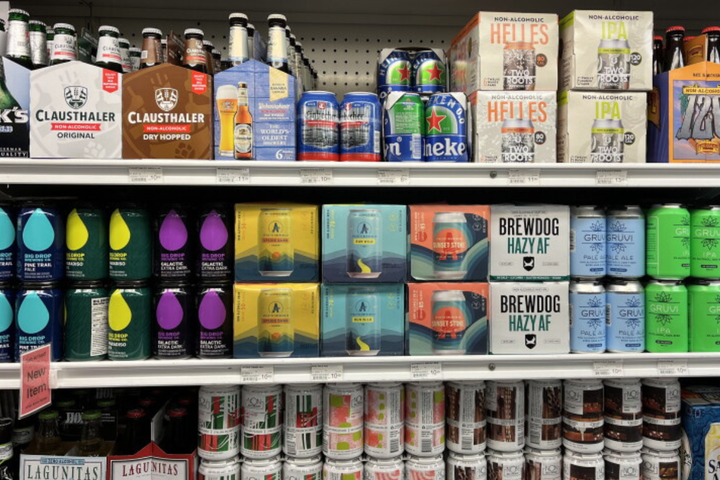
The shops followed. Drizly reported its non-alcoholic sales up 73 percent during Sober October 2023, and the drinks trade now treats the month as a second selling season after January. A month invented to buy a hospital a television is now a line on a retail calendar.

Who owns Sober October now
This month the original arrangement came apart. Macmillan ended its involvement. Sober October is now owned and delivered by Ezy Raise, a fundraising platform run by Brett Macdonald, one of the three men from the garage, and the charity partner is Alcohol Change UK, the small charity that started Dry January and objected to the golden ticket. Its target for October is £30,000. The golden ticket appears to have gone; the new page does not mention a night off. When the handover was announced, Macmillan was still listing Sober October t-shirts and cocktail glasses.
So the month has evolved, and the direction is the point. It started as a way for charities to raise money, and not drinking was the stunt. It became a way for people to test themselves, and the stunt was the whole point. Now the charity is the junior partner, the fundraising is a footnote, and what is left is the pledge itself: a month off, with a name.
Dry January was different from the start. It was run by an alcohol charity, and its interest was the drinking itself, not the sponsorship. It became a habit, because January supplies its own reason: the money is spent, the parties are over, and a new year is asking for a resolution. Nothing about October asks anyone to stop drinking, so every version of Sober October has needed someone to supply the reason, a charity's events team, four comedians and a bet, a wearables company, a retailer's end cap, and each time the sponsor moved on, the month went quiet. It has peaked and faded twice, in Britain and then in America, while January kept growing.
A month invented to buy a hospital a television is now a line on a retail calendar.

October only ever had a sponsor.
A pledge with a season and an end date is the temperance pledge again, the one that built a century of alcohol-free bars and could not keep them open, and the rooms that live on it have a season too. Sober October will start on October 1 the way it does every year, with a new owner and a target. Dry January will start on January 1 without needing one.


Make sure to follow us on Instagram for new blog posts and event updates, or come visit us in the East Village.
Follow @nomore_cafe