Share
Who You'd Actually Call
A year of research into who could fix this, and why none of them have.
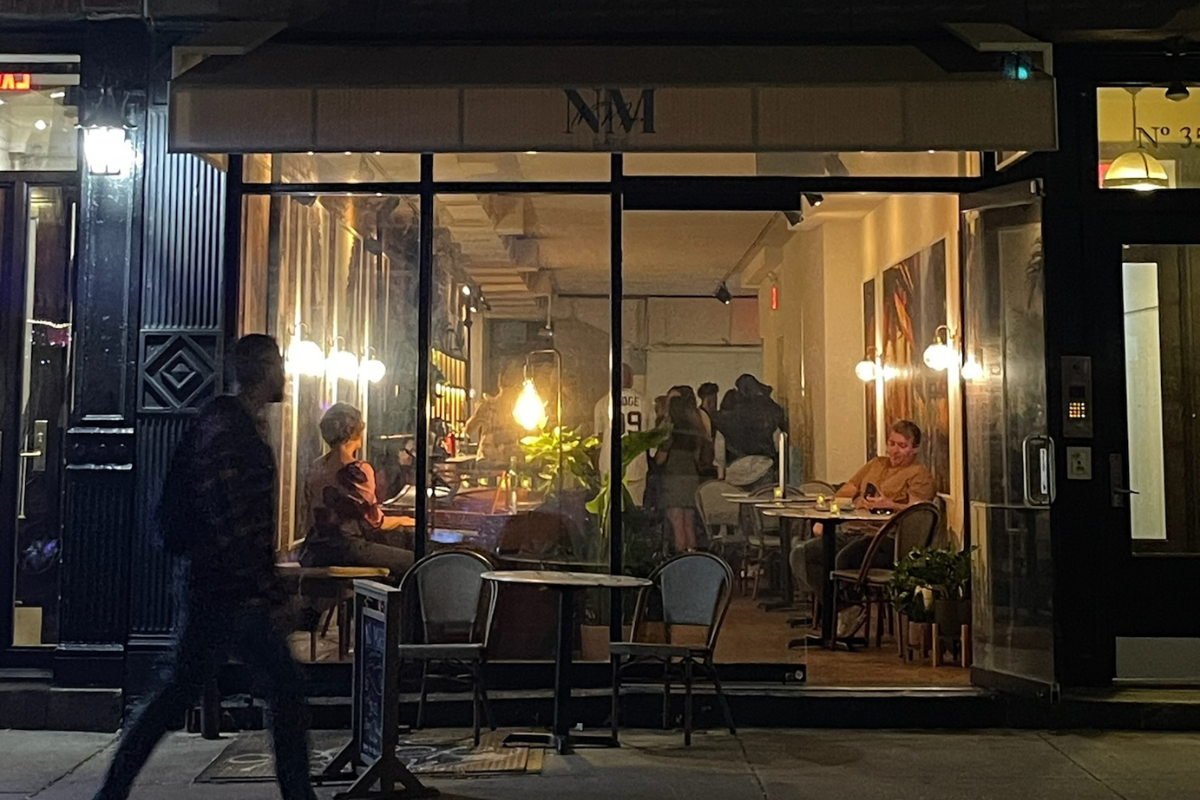
Last week we put up an open letter explaining what is happening to No More Cafe, out of frustration, because after a year we finally came to the conclusion that we will have to bite the bullet and spend money we don't have to make this go away. We did it to put a name on a problem that has been quietly bleeding small businesses everywhere for years without a sign of slowing down, and we figured a few hundred people might read it.
It turned out a lot of people did. The response was kind, the messages from other owners were brutal, and most of it was variations of the same theme. Dozens of you reached out to share your own version of the story, which was nearly identical every time: a letter from a federal court, a lawyer no one had met, a "customer" who had never been to the establishment, a complaint full of allegations that did not quite match the space, a settlement number set just below the cost of fighting it.
What I also found interesting was how many of you suggested I contact my representatives. Like it was a revelation. Like nobody had ever thought of that. I did not plan to write a second post. After a year of being on the receiving end of this, I have spent more hours on research than I care to admit, and for everyone who still believes phoning your assemblyman moves the needle on something like this, this one is for you.
There are roughly a million small businesses in New York State. Federal ADA Title III filings against them run in the low thousands per year. As a percentage that is small enough to be invisible. As a phenomenon it is everywhere if you ask the right people. It is the exact kind of problem politicians never have to face, because nobody who has not been hit knows it exists, and the people who have been hit have already paid to make it go away.
So when you start trying to figure out who would actually move on a problem like this, you start with the people who represent the block where you live and work. Walk through what is there.
The Local Level
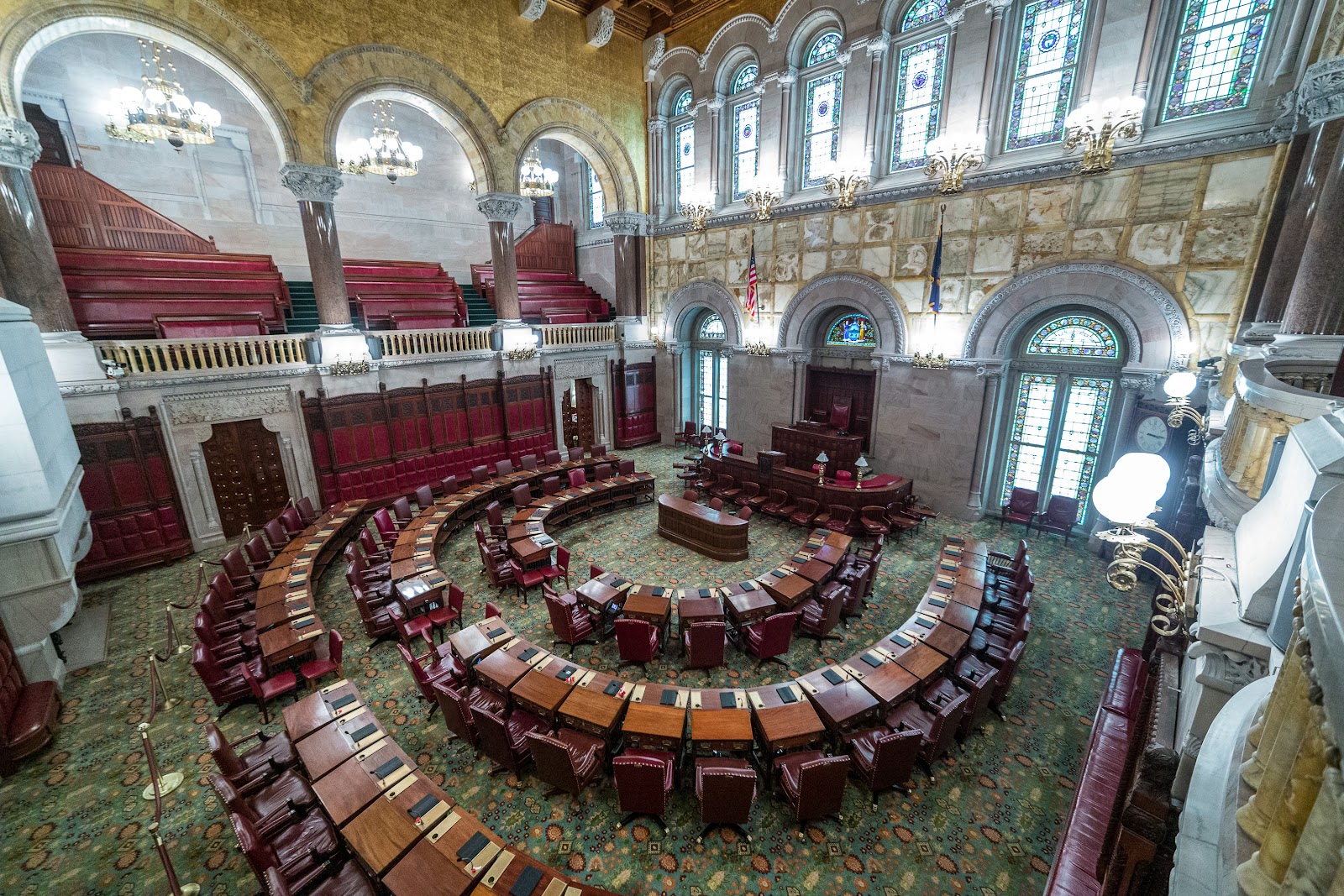
Council Member Harvey Epstein represents District 2, which covers the East Village. He took office in August 2025 and inherited a chamber where two bills addressing exactly this problem were already sitting in front of him. One, Int 1260-2025, introduced by a Brooklyn councilwoman named Mercedes Narcisse, would have added free legal defense for small businesses sued under the ADA to an existing city program. The other, Int 0282-2024, introduced by an Upper East Side member named Julie Menin, would have funded grants of up to a quarter-million dollars per storefront for accessibility upgrades before a lawsuit could land. Epstein did not co-sponsor either bill. Both died in committee on December 31, 2025, the last day of the council session. They did not die because of opposition. Not a single witness testified against either of them at the joint hearing. They died because nobody with power picked them up.
State Senator Brian Kavanagh sits on the Codes Committee in Albany, which handles the kind of bill that would address this situation. He has never co-sponsored anything on it. He announced in February that he is not seeking re-election. He is leaving office at the end of the year having spent no public effort on the issue.
Not a single witness testified against either of them. They died because nobody with power picked them up.
The Bill in the Drawer
The cure-period bill that does exist at the state level is called S.3237. It is sitting in the drawer of a state senator named James Skoufis, who chairs the committee where it lives. It has been sitting there for more than fifteen months. He has not scheduled a hearing. He has not publicly mentioned the bill once. His stated chair priorities are pharmacy benefit managers, ticketing scams, utility rates, and housing discrimination. Worthy fights, all of them. This one is not on his list.
The bill's own sponsor is a Rochester state senator named Jeremy Cooney. He has introduced this exact text three times. 2021, 2023, 2025. It has never received a hearing in any of them. Last June he put out a press release titled "Senator Cooney Finishes The 2025 Senate Session Strong." His own bill is not mentioned in it. The advocacy group that is supposedly lobbying for it still has the wrong bill numbers on its website. The man whose name is on the only piece of legislation in New York that touches this issue stopped fighting for it years ago. The opposition does not bother to fight against it. It is alive on paper and dead in fact.
It is alive on paper and dead in fact.
Who Decides in Albany
Above all of them sit the two people who actually decide what gets to the floor in Albany. Assembly Speaker Carl Heastie and Senate Majority Leader Andrea Stewart-Cousins. In 2025 alone, the trial lawyers' political action committee paid $25,000 to each of their political committees. The same association paid Heastie's longtime communications consultant, a man named Patrick Jenkins, $528,000 in 2025 alone, lobbying for the trial lawyers in Albany. The trial bar as a whole spent $6.5 million on New York lawmakers between 2022 and 2025. The people who decide whether the bill in Skoufis's drawer ever comes out are on a payroll funded by the firms that would lose money if it did.
The people who decide whether the bill in Skoufis's drawer ever comes out are on a payroll funded by the firms that would lose money if it did.
The Speaker
Then there is Julie Menin. Two years ago she introduced the City Council bill to fund accessibility upgrades. She let it die on December 31, 2025, without a floor vote. A week later she was elected Speaker of the New York City Council. In her first major speech she said she was going to make life easier for small businesses by slashing fines and cutting red tape. She did not mention her own dead bill. Her ten priority bills for 2026 include dog waste dispensers and election deepfakes. None of them is about accessibility. As Speaker she could, if she chose, refile her own legislation tomorrow. She has decided not to.
The Attorney General
The Attorney General of New York is Letitia James. Trial lawyers' firms and their political action committees have given her campaign $290,000. She has never publicly addressed serial ADA filers. She has never opened an investigation. She has never made a statement.
The Congressman
Congressman Dan Goldman represents the East Village in Washington. He sits on the House Judiciary Committee, which is the first procedural gate any bill of this kind has to clear before the full House can vote on it. In March of this year, the federal version of the cure-period bill, HR 6453, came up for that committee vote. The committee approved it 16 to 8 and sent it forward, where it is now waiting for a House floor vote that has not been scheduled. Every reporting source from the markup confirms that only one Democrat on the committee voted yes, and it was not Goldman. The Democrat who voted yes was a California congressman named Lou Correa, whose son Adan is a cast member of Netflix's Love on the Spectrum. Goldman has issued no public statement about his vote.
The Senators
Which brings us to Senator Chuck Schumer and Senator Kirsten Gillibrand. Eight years ago, in 2018, a federal cure-period bill called HR 620 passed the House of Representatives by a vote of 225 to 192. It went to the Senate with real momentum, and for one moment in the past twenty-five years, ADA reform was actually live in this country. Then Senator Tammy Duckworth of Illinois circulated a letter. Forty-three Democratic senators signed it, pledging to block the bill in the Senate. Schumer signed. Gillibrand signed. The bill died without ever reaching a vote.
It is worth knowing how the rest of New York voted before the bill ever got to the Senate. On the House floor that February, twenty-seven New York representatives cast a vote on HR 620. Nine voted to pass it. Eighteen voted to kill it. Those eighteen included Hakeem Jeffries from Brooklyn, who today is the House Democratic Leader. Nydia Velazquez from Brooklyn, the Ranking Member of the House Small Business Committee. Jerry Nadler from Manhattan, who led the floor opposition that day. Yvette Clarke, Adriano Espaillat, Gregory Meeks, and Grace Meng, four representatives from Brooklyn and Queens who are still in Congress today. And Tom Suozzi from Long Island, who had cosponsored the bill earlier that same year and withdrew his name under pressure from disability advocates before voting against it on the floor.
I have read HR 620. It is five sections long. There is nothing in it beyond the cure-period reform itself, an education provision, and a mediation program for federal courts. No riders. No unrelated attachments. The disability advocacy community's real critique of the bill was a single phrase, "substantial progress," which they argued would let businesses run out the clock indefinitely. That critique was fair. The senators could have proposed an amendment to tighten it. They could have negotiated. They did not. They signed a letter pledging to block any cure-period reform full stop. Lawyers and law firms are Schumer's number-two career industry donor at roughly $11.6 million. The math was done before any of them walked into the room.
The math was done before any of them walked into the room.
How the Trap Works
Before getting to why none of these people acted, there is one more piece of this trap worth understanding.
A small business in New York can be sued for accessibility on two completely separate fronts. The first is physical access: ramps, bathroom dimensions, counter heights, a doorway too narrow for a wheelchair. The second is website accessibility: missing alt-text on images, navigation that does not work with a screen reader, a checkout flow that breaks for assistive devices. Different laws, different evidence, different plaintiffs, often different law firms. A pizzeria can be sued over a step at its front door one day, and sued by an unrelated plaintiff over a missing image tag on its online ordering page the next day. It happens. The two suits are not connected. The two plaintiffs do not know each other. The two firms behind them are running different volume operations against different categories of violation.
It gets worse. When a small business settles one of these lawsuits, the settlement does not mean the underlying problem got fixed. Most settlements are confidential cash payments that release the specific plaintiff from the specific case. They do not require remediation that anyone else can verify. So a business that settles one suit can be hit the very next day by a different plaintiff alleging the exact same violation, and the settlement from the first case is no defense against the second. The business pays, and the door stays open.
To give you a concrete example: the suit against me listed thirty-five things the plaintiff claimed were wrong with the space. The settlement, on top of the cash, said I needed to fix eight of them. Of those eight, six were never an issue to begin with. The other two were fixed for seven dollars at a hardware store and by moving a fixture by an inch.
On top of that doubling, every one of these claims can be filed in either federal court under Title III of the ADA, or state court under the New York State and New York City Human Rights Laws, which are actually broader than federal law and which allow monetary damages on top of attorney's fees. The lawyers shop the venue. When federal judges in Manhattan started enforcing standing rules more strictly a few years ago, one of the largest filing firms in the country, Mizrahi Kroub, shifted most of its filings out of federal court and into state court within a single year. The pipeline does not get smaller. It just changes addresses.
This is the part that should make anyone paying attention furious. The state-level cure-period bill sitting in Skoufis's drawer for the past fifteen months only addresses website lawsuits. It would not have prevented a suit like mine, which is about a physical access barrier. There is no New York state bill on file that would have. Three sessions, two upstate sponsors, identical text every cycle, and the bill they have not bothered to move does not even cover the most basic kind of complaint anyone in this city is being sued for.
The federal bill, HR 6453, does cover both physical and digital. That is the bill Dan Goldman did not vote for in March. Even if HR 6453 somehow passed tomorrow, the lawyers would simply refile under state law, which gives them more leverage than federal law does anyway. The whole pipeline survives unless every level moves at once. None of them is moving.
The Judges Who Cannot Be Reached
A few people asked whether the judges are paying attention. The honest answer is yes, and it does not help, because they can only help at the end, and getting to the end costs too much money.
Federal judges in the Southern and Eastern Districts of New York have started pushing back on these filings in real ways. Judge Valerie Caproni in Manhattan sanctioned one of the largest filing firms in the country for what she called "boilerplate" complaints with no factual basis. Judge Mary Kay Vyskocil began requiring plaintiffs to produce actual evidence that they had ever intended to visit the businesses they were suing. Judge Lewis Liman started dismissing these cases with prejudice so they could not be refiled. The federal courts are starting to police the volume.
The problem is the math. To benefit from a judge dismissing a case against you, you have to defend yourself long enough to get in front of that judge. Filing a motion to dismiss costs a small business owner over ten thousand dollars in legal fees before any judge ever looks at it. The settlement number on the table is usually ten to twenty thousand. By the time a judge could rule in your favor, you have already spent more defending the case than the shakedown would have cost in the first place. So roughly ninety-five percent of small businesses settle. The judges who would dismiss these cases never get to see them, because the people they would protect cannot afford the door.
Why None of Them Acted
There is no cavalry coming. Not from the council, not from the Assembly, not from the Senate, not from Congress, not from the Attorney General, not even from the federal judges who would help if they could be reached.
Every person walked through above had a chance to act. None of them did. They have two reasons for what they did, and both deserve to be said out loud.
The first is that they do not think this matters enough to spend political capital on. There are about a million small businesses in New York, and only a few thousand get hit each year. The pain is real, it is concentrated, and it is invisible to everyone who is not on the receiving end. There is no rally for this. There is no march. There is no caucus. A politician who pushes reform gets no donations, no endorsements, and no votes they would not have gotten anyway.
The second is that they are afraid of the attack ad. Every politician who has ever voted for any procedural change to the ADA knows what is coming. A coalition letter signed by 236 advocacy organizations lands in their inbox the same day. A primary challenger uses the vote against them in the next cycle. A Long Island congressman named Tom Suozzi learned this in 2017. He cosponsored the federal cure-period bill, was hit by disability advocates within months, withdrew his name, voted no on final passage, and had his spokesperson publicly insist he "fully supports the ADA." Every New York Democrat watched it happen. None of them has cosponsored a cure-period bill since.
That is the whole answer. They do not think it matters enough, and they are afraid of the ad. The bill is in the drawer. The senators have already voted. The Speaker abandoned hers. The Attorney General has been silent. The congressman did not vote for it this spring. The judges who could help cannot be reached, because the cost of getting in front of one is higher than the cost of giving up.
There is no one to call.

And honestly, even if there were, the bill they have been failing to pass for a decade is not actually the right fix. A sixty-day grace period after the fact gives a business sixty days to address a problem they were only notified of by a lawsuit. It does not push anyone to make a space accessible before someone shows up to sue them, and without financial incentive, nobody will. It just changes who gets paid when the lawsuit lands. The reform everyone has been failing to push for ten years would not, by itself, make a single business more accessible to a single person who needs it. It would only give the lawyers less to extract.
Just like most things these days, the problem comes down to incentives, and to who is motivated to do what, for what reason.
The honest version of this fight is somewhere else entirely. I know what I would do if I could. Part 3 is next week.
Part 3 lands next Thursday.
If you want it in your inbox, drop your email below.