Share
Alcohol-Free Stopped Meaning Sober
California sober, Florida sober, Miami sober. There is a version of sober for every drug now, which means the word quietly stopped meaning anything.
Somewhere in the last few years, sober turned into a thing people announce. Not a quiet decision but a credential, dropped into conversation the way someone mentions a marathon. And like a lot of credentials, it got easier to claim than to earn. The proof is in the qualifier that now trails it everywhere. California sober. Florida sober. Miami sober. When a word needs a region bolted to the front of it to tell you what it actually allows, the word has stopped doing its job.
Sober used to mean one simple thing: not altered. Clear head, nothing on board, present for your own evening. That is still exactly what people in real recovery mean by it, because for them the line has to be precise. Everyone else has spent a few years sanding it into something softer and a lot more flattering, and the beverage industry has been glad to sell the sandpaper. So before the word disappears entirely, it is worth asking what each of these new versions actually keeps.
California sober, Florida sober, Miami sober
Start with the qualifiers, because by now it is genuinely a menu.
California sober is the original. The journalist Michelle Lhooq used it around 2019 to describe cutting alcohol and hard drugs while keeping cannabis, sometimes with psychedelics on the side. It is in Merriam-Webster now. By the traditional definition, where sober means no mood-altering substances at all, it is not sober. It is a lighter relationship with being altered that kept the one part its owner did not want to give up.
Florida sober is the recovery-circle cousin, and it is usually said with a raised eyebrow. Depending on who is using it, it means off the hard drugs and alcohol but leaning on prescriptions to get through the day, or off the hard stuff while still drinking. Either way it carries a quiet accusation that the person is grading themselves on a curve.
Miami sober is the punchline the others were building toward. Per the internet's running version, it means sober from everything except your one drug of choice, the alcohol, and whatever happens to get handed to you at the party. Which is to say, not sober in any direction.
Three regions, three asterisks. The only thing all of them share is the idea they quietly delete: that sober once meant nothing on board, not nothing-except.
Now pick a zip code
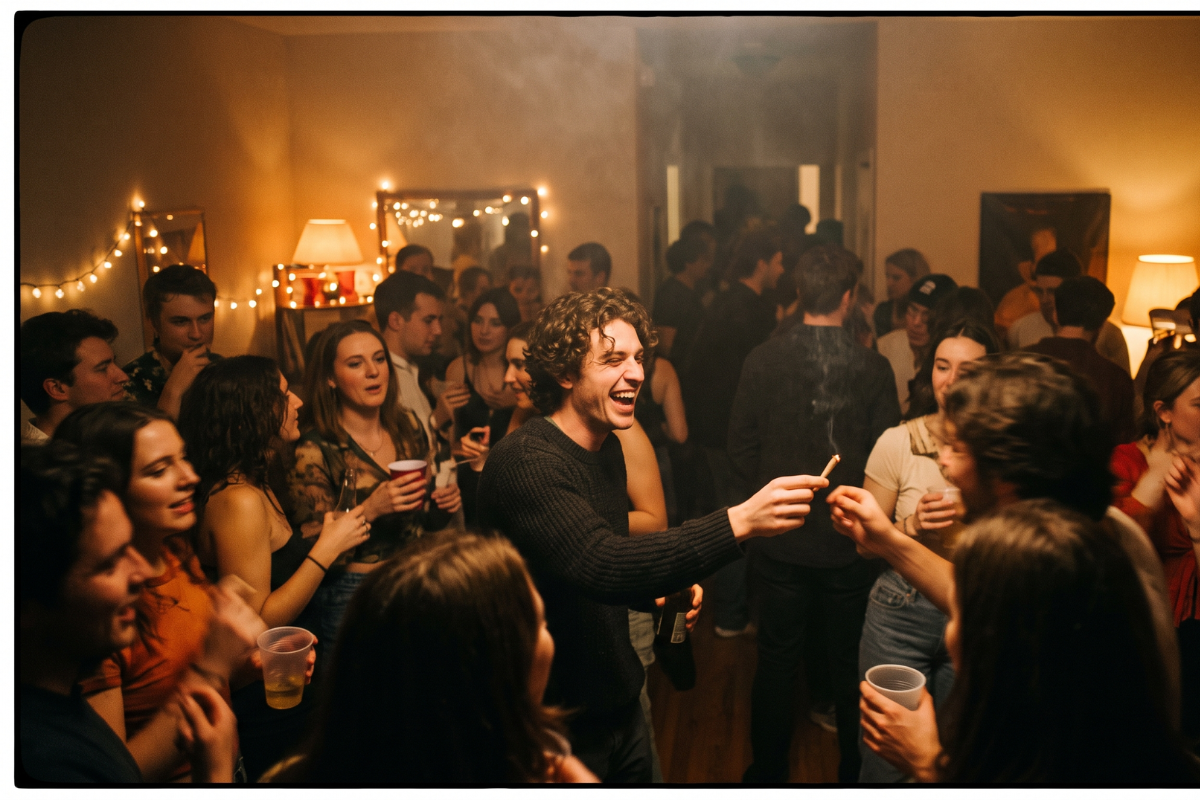
Once the format caught on, it metastasized. There is a sober for nearly every city now, and the joke is that you can no longer tell the real ones from the bits.
On their New Heights podcast, the Kelce brothers and their guests spun up Kansas City sober, which somehow still makes room for the local beer and the local whiskey. Buffalo sober, in the same conversation, meant skipping the liquor but keeping the beer and wine. From there the internet ran. A New York sober that trades the alcohol for cocaine to keep pace with the city. A Brooklyn sober that holds onto the ketamine. A Texas sober built on kava, an Oregon sober that permits only the good local IPA, a Utah sober that swaps the booze for an enormous caffeinated soda.
Some of these are real lifestyle claims. Some are pure satire. Most of the time you genuinely cannot tell, and that is the point. When a word can be remixed into a punchline for every region and every vice, it has stopped carrying a definition. It is carrying a vibe.
How a punchline went mainstream
The term did not crawl up from a forum. Demi Lovato put it on the map in 2021, after a near-fatal overdose, as a public framework for moderation. Then, later that same year, Lovato walked it back and said sober sober is the only way to be. The phrase outlived the endorsement. It had already escaped into everyday use, where it stopped being a recovery strategy and became a lifestyle flex you could wear to brunch.
It is now respectable enough that scientists are testing it. In November 2025, researchers ran what was described as the first clinical study of the California sober idea, checking whether cannabis users actually drink less. The early read was that some did, at least in the short term. File that honestly: whether swapping one substance for another helps anyone is a real and open question, and serious people are studying it. That is a different conversation from the one happening at the party, where the science is beside the point and the appeal is the word itself.
When a word gets valuable, people start wearing it
Here is why the qualifiers exist at all. Sober got valuable. It started signaling discipline, wellness, a certain put-together seriousness, the kind of thing that reads well at a dinner table or on a profile. And the moment a word carries that much social credit, people find a way to claim it without doing the work it used to require.
So you get the guy who skipped the wine, did a bump in the bathroom, and calls his year sober. The friend on a steady mushroom routine who has simply, proudly, quit drinking. None of it is a lie, exactly. It is a word being used for how someone wants to be seen rather than what they actually did that night. That is the tell of a flex, not a fact. And every time it happens it spends down the word a little more for the people who got genuinely sober and meant the whole of it, asterisk-free.
Sober stopped describing what you do and started describing how you would like to be seen.
Sober, now with terms and conditions
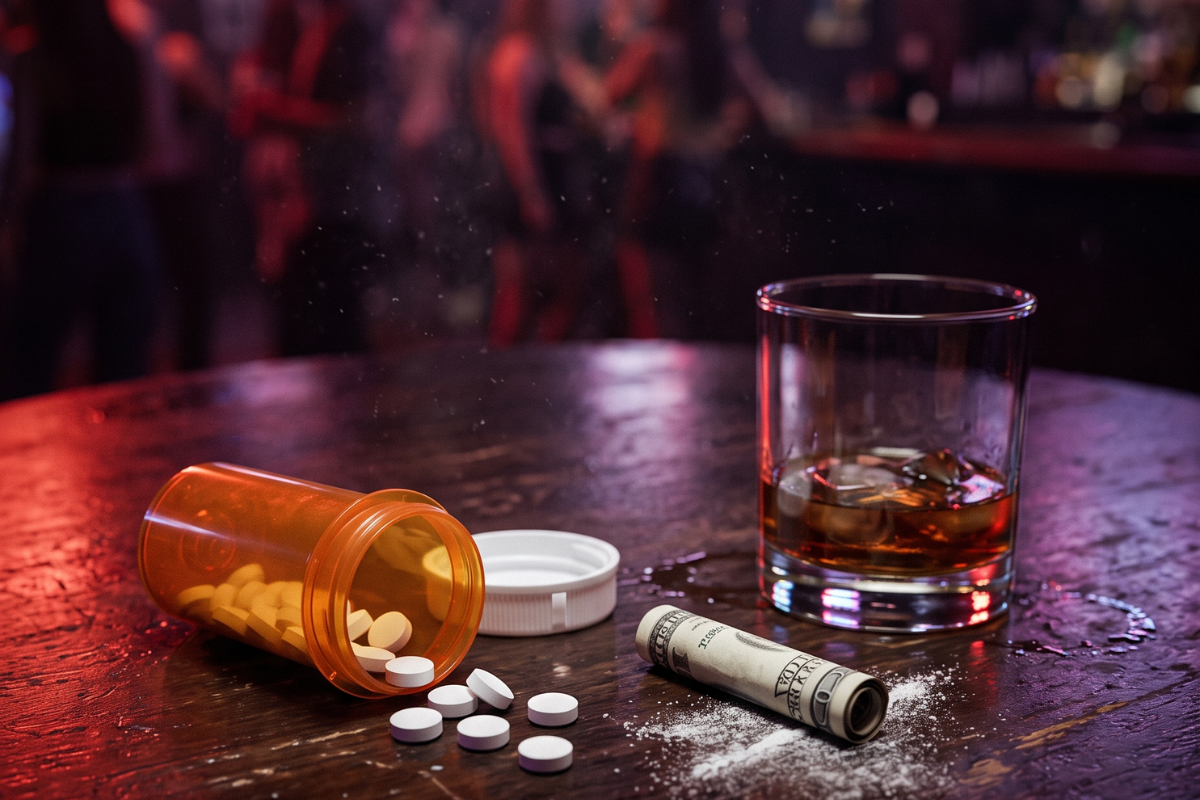
California sober: the cannabis stays. Florida sober: the pills stay. Miami sober: your one thing stays, and so does whatever gets handed to you.
Three regions, three asterisks, one quietly deleted idea. The word used to mean nothing on board. Now it mostly means nothing you feel like mentioning.
The same can, a dozen different highs
The drink cooler tells the same story in miniature. Walk one today and you will find the identical can of sparkling water sitting in a row of near-twins. One has CBD. One has hemp THC. One has kava. One has kratom. One has a nootropic blend, one has an adaptogen, and one, somewhere in there, is just water. They share a shelf and a vocabulary: alcohol-free, functional, sober-curious, made for the new way of drinking.
But those cans do wildly different things to you, and for several of them the doing is the entire point of the purchase. I went deep on one in our kratom explainer, and on the law about to reshape another in this piece on the hemp ban. Line them up under one word and you have done to the aisle exactly what the dinner party did to the word: turned not-altered into a vibe you can buy while getting altered. It is no accident this happened as drinking slipped. In 2022, for the first time on record, more Americans reported using cannabis daily or near daily than alcohol. The wanting did not go away. It just changed cans.
The questions people actually google
A lot of people end up typing some version of this into a search bar, so here are the straight answers.
Is California sober really sober? By the definition used in recovery, where sober means abstaining from all mood-altering substances, no. California sober keeps cannabis, and often psychedelics, so it describes a lighter relationship with being altered rather than the absence of it.
Can you be sober and still smoke weed? It depends entirely on whose definition you are using, which is the whole problem. To the recovery world, no. To the California sober crowd, yes. The same word now means opposite things to different people.
What is the difference between California sober, Florida sober, and Miami sober? California sober keeps the cannabis. Florida sober keeps the prescriptions, or just the alcohol, depending who is talking. Miami sober keeps your one drug plus the alcohol plus whatever gets offered. The asterisk grows as you move down the list.
Does alcohol-free mean sober? No. Alcohol-free is a fact about one ingredient that is not in the can. Sober is a claim about your state. A hemp THC seltzer is alcohol-free and will still get you high, which is exactly how the two words came apart.
For what it's worth
To be honest, I could not care less what you do or why. I used to drink a lot, now I drink a little, and I have had a long and complicated relationship with drugs and alcohol. I am not anyone's judge here.
What gets me is smaller and bigger than sobriety. We have started taking words that used to be hard to earn and quietly loosening them until anyone can claim them with a straight face, no sacrifice required. It is participation-medal logic applied to language. Last place crosses the line and still gets something to hang on the wall. Everyone is a winner, results optional. Sober just happens to be the latest word to get a medal.