Share
Do Functional Mushroom Drinks Actually Work?
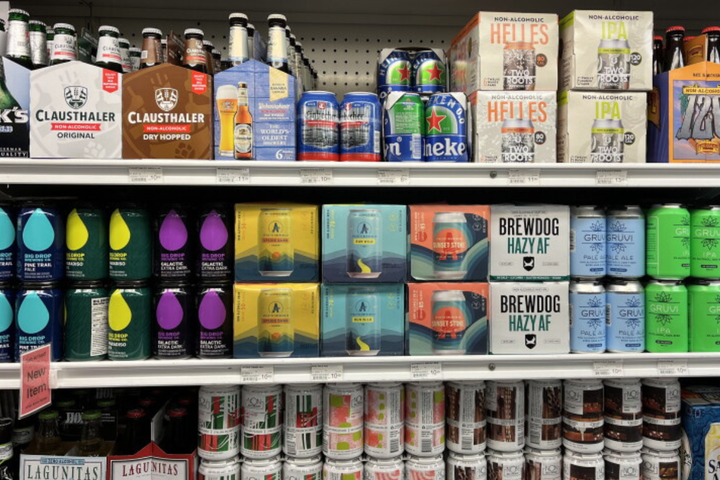
The mushroom is not new. The marketing is. Read the dose.
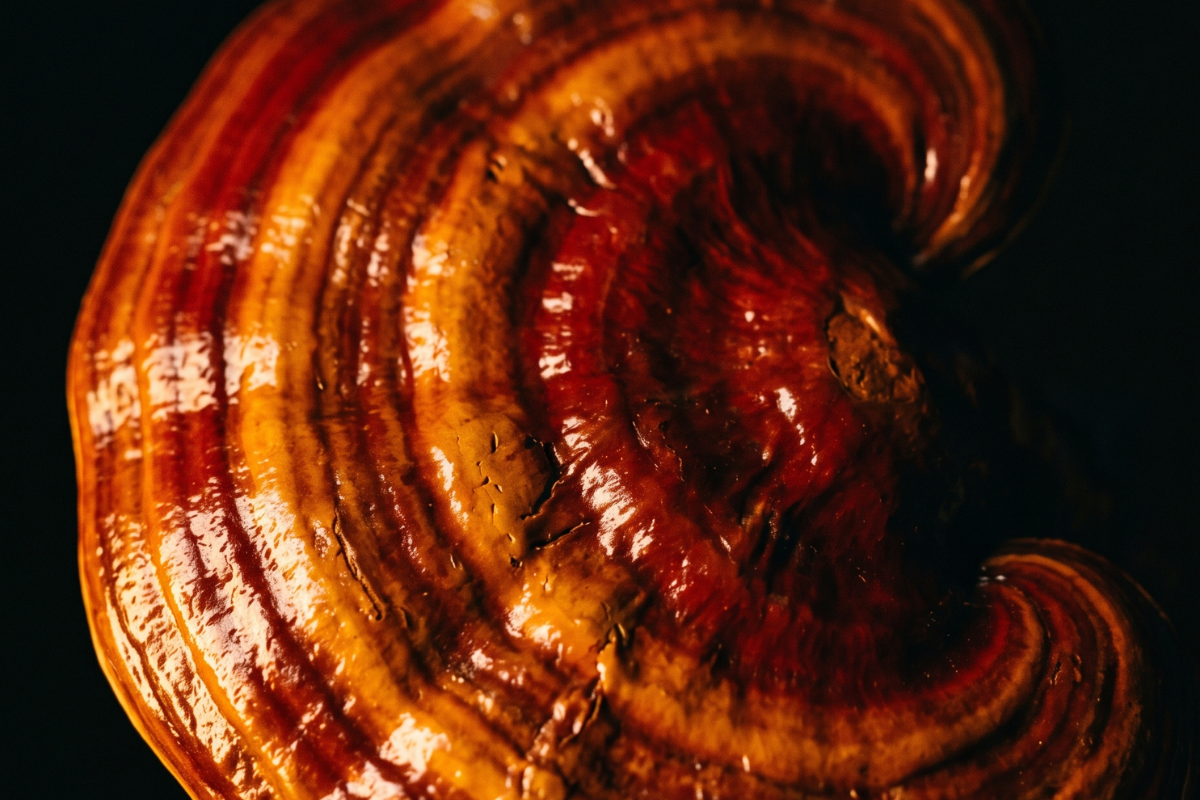
The mushroom is having a moment. Lion's mane in the cold brew, reishi in the nightcap, cordyceps in the pre-workout, all of it sold as a discovery, as if someone just found out that fungi could do something to a person. It is worth remembering that reishi has been medicine for two thousand years. The Shen Nong Ben Cao Jing, compiled around 200 CE, filed it among the superior herbs meant for daily use, and Chinese physicians were prescribing it long before that. Nothing about the mushroom is new. What is new is the marketing, and the marketing has gotten very good at selling you almost none of it.
We are not here to tell you mushrooms do nothing. We are here to tell you that a drop of extract in a can is not the same as the thing that has two thousand years behind it, and the gap between those two is where most of this category lives.
What They Actually Claim, and What Holds Up
Three mushrooms carry most of the drinks. Lion's mane is sold for focus and memory. Reishi is sold for calm, sleep, and immunity. Cordyceps is sold for energy and stamina. Each has a real research file, and each file is more honest than the label that quotes it.
Lion's mane has a handful of small human trials, and they genuinely disagree with each other. A few show a mild lift in mood or a dip in stress. Others show nothing, and one careful trial found worse word recall than placebo. Reishi has more studies, including two Cochrane reviews, and the reviewers rate most of the evidence low quality: some markers move a little, the lasting benefit is unproven. Cordyceps is the tidiest of the three. A few endurance trials show small, real gains in aerobic performance. The catch is buried in the methods section: those gains showed up after weeks of daily grams, not after one bright can on a Tuesday.
That is the honest pattern. Where these mushrooms show anything, they show it at real doses, taken for real stretches of time. Which brings us to the number nobody prints on the front of the can.
The Dose Is the Whole Story
Here is what the studies used. The lion's mane trials that measured anything ran on roughly 1.8 to 3 grams a day. The reishi trials ran from about 1.4 grams to over 5 grams a day. The cordyceps endurance work sat around 2 grams a day for eight to twelve weeks. Grams. Daily. For weeks.
Now read your drink. A typical mushroom coffee carries 250 to 400 milligrams of extract per serving. A canned wellness soda often carries a few drops of a tincture, which is less. To reach a dose that a study could actually measure, you would need somewhere between four and a dozen servings a day, every day, for a month or more. Nobody drinks that way, and the brands know it. A few drops is not a dose. It is a permission slip to put the word on the can.
A Vitamin, Not an Espresso
Here is the part the marketing gets exactly backwards. A mushroom does not work the way caffeine works. Caffeine is a switch. It shuts off the signal that tells your body it is tired, and you feel it flip within twenty minutes. That is a boost. A mushroom has no switch to flip.
What a mushroom does, it does slowly. Lion's mane, taken every day, gently pushes your body to make more of a protein it uses to maintain and repair the brain. That is upkeep, not a jolt, and the people who study it say to give it eight to twelve weeks before you judge anything. Reishi and cordyceps run on the same patient clock. Nothing in that story happens in the time it takes to finish a drink.
So think of a real mushroom the way you think of a vitamin. It is good for you, it does something, and it only does it if you take it consistently over time. That is not a knock. We love mushrooms. But a vitamin is not a shot of espresso, and the whole business has decided to sell it like a Red Bull: a sleek can, a promise of a lift, a price to match. The packaging is shaped like energy. What is inside, at best, is a supplement you would have to take every day for two months to feel.
A few drops of extract is not a dose. It is a permission slip to put the word on the can.
Half of It Was Never Mushroom
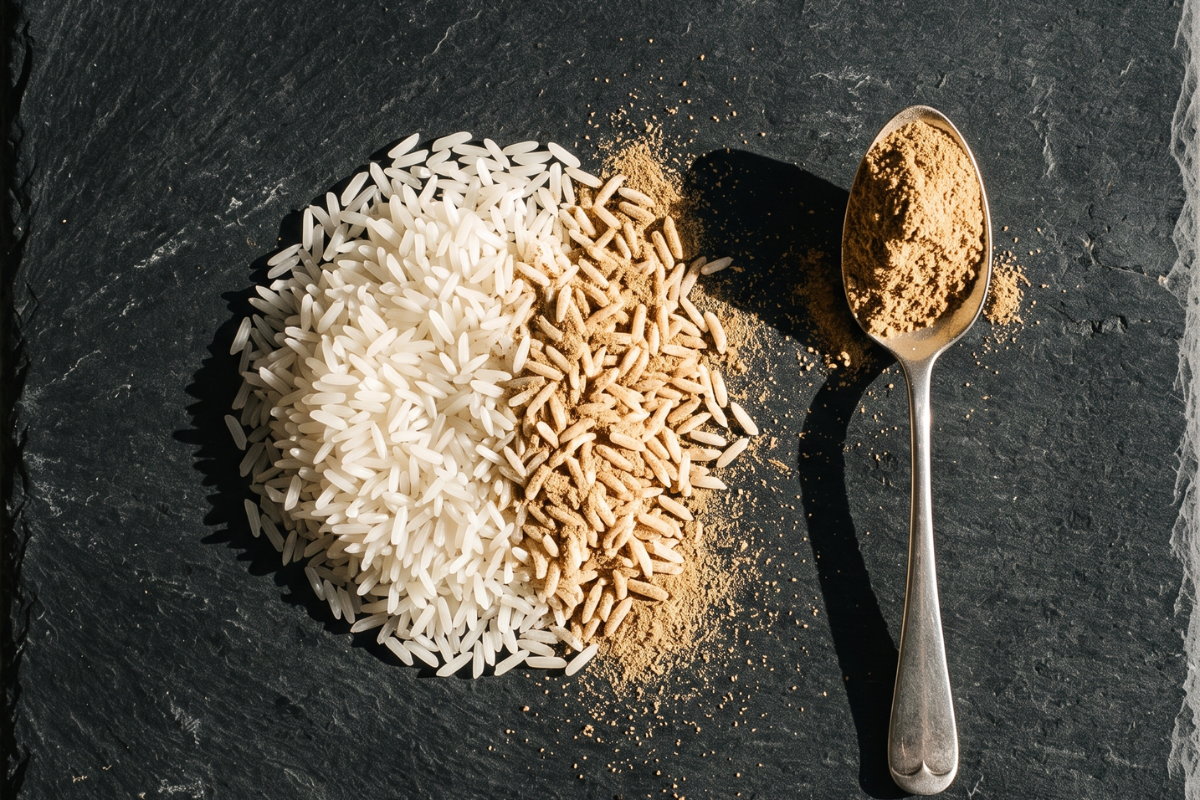
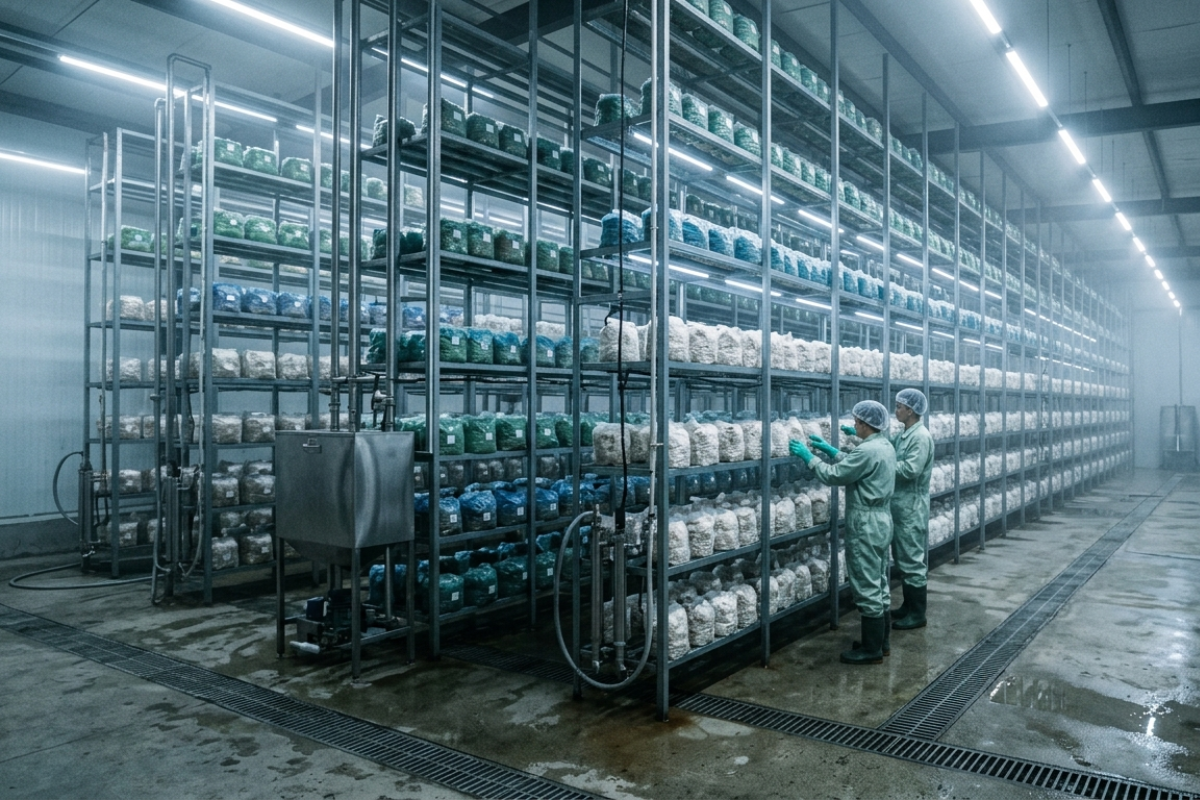
Then there is what is even in the powder. The cheap way to make mushroom is to not grow the mushroom at all. You grow its roots, a thread-like web called mycelium, on a block of cooked grain, usually white rice or oats. Then you dry the whole block, grain and all, and grind it into powder.
Independent labs have tested these powders for years, and many are mostly starch, the same starch as plain white rice. A real mushroom is a quarter to a third active compound, the part worth taking. The grain versions often test near zero. You are buying ground rice with a mushroom's name on the label.
A Forest Cannot Scale Like a Factory
Now put the two halves together, because the supply side is where this gets interesting. Demand did not drift up. It detonated. US mushroom supplements posted 75.8 percent sales growth in a single year, 2023, the largest jump of any major ingredient in mainstream retail, by the American Botanical Council's count. Lion's mane on its own became a market worth well over a billion dollars, still climbing at double digits a year.
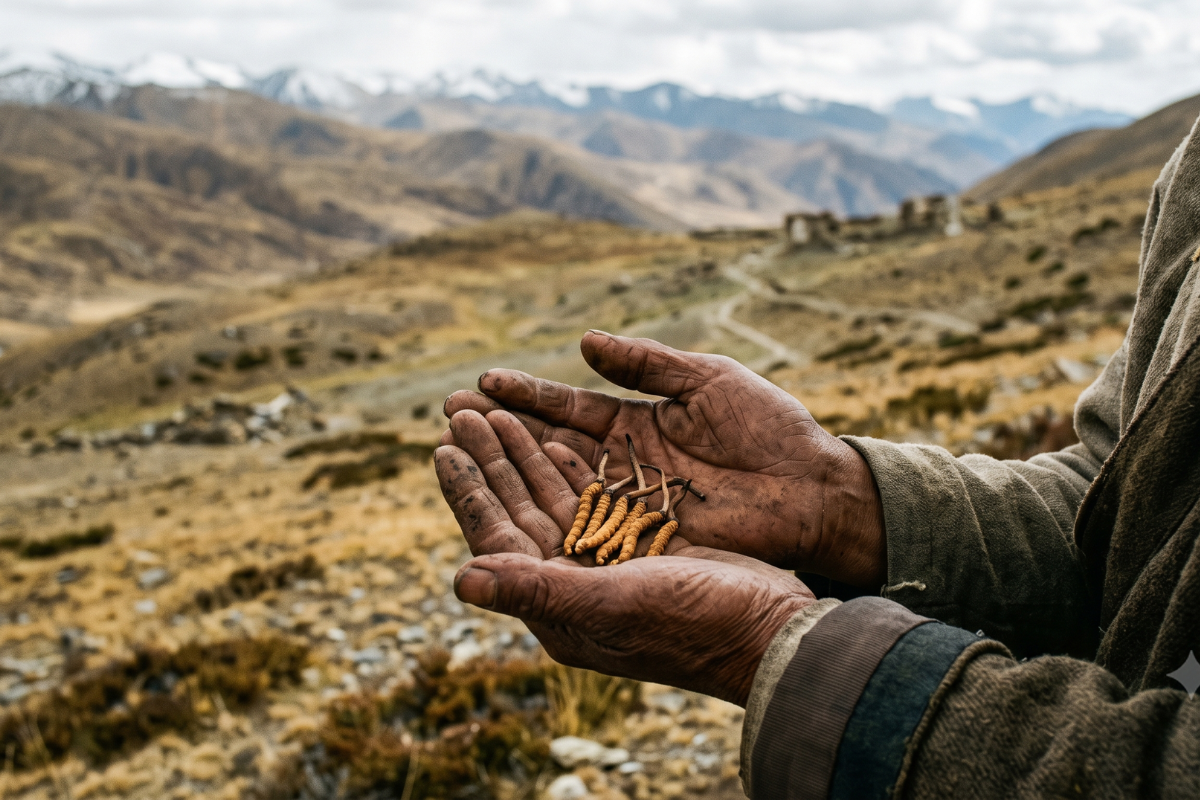
A factory can answer a spike like that. A forest cannot. A real reishi fruiting body takes roughly two months to grow indoors on sawdust, and nine to eighteen months if you raise it the old way on logs. Lion's mane needs six to eight weeks done properly. And the most prized of the three, wild cordyceps, cannot be farmed at all. It comes off the Tibetan plateau above twelve thousand feet, hand-collected in a four-to-six week window each spring, now classified as endangered with harvests shrinking year over year even as demand climbs. Its price has run past twenty thousand dollars a kilogram, up roughly nine hundred percent across one recent decade. That is not an ingredient you scale. It is an ingredient you run out of.
So the honest supply is slow, geographically narrow, and in the best cases getting smaller. Roughly ninety percent of the world's cultivated mushrooms come out of China, and by most estimates two-thirds to four-fifths of the functional mushroom material sold in the United States is imported, most of it from there. Growing the real thing on this continent is priced out of the supplement business almost entirely. The cheap, fast answer, the one the category quietly standardized on, is lab-grown mycelium on grain, ready in days instead of months.
That is the whole trick in a sentence. When demand jumps seventy-six percent in a year and the good raw material takes months to years to appear, something has to close the gap, and grain closed it. The dilution is not a scandal hiding inside the category. It is the load-bearing wall the boom was built on.
So Read the Can Again
None of this is a case against mushrooms. They are worth taking. It is a case against the can, and the story it is telling you: a feeling it cannot deliver, on a timeline that does not exist, from an ingredient that is often barely in there.
So the next time a drink promises focus, calm, or energy from a mushroom, remember the one line the marketing will never print. If you feel something in the next twenty minutes, it was the caffeine, the sugar, or the hope. Anyone telling you a mushroom gave you a boost from a single drink is simply lying to you.