We Are Getting Sued, and It Is an Existential Crisis
Share
We Are Getting Sued, and It Is an Existential Crisis
We don't usually write about this kind of thing. Today we are.

A year ago, a man we had never met sued No More Cafe.
He claims he tried to enter and was unable to. He listed thirty-five things that are wrong with us. Some of them are things that don't even apply to us. He has filed over 50 other lawsuits like this one in the past couple of years. And it will cost me about as much to hire a lawyer to defend us as it would to write him a check and make him go away.
That math is not an accident. It is the entire business model.
This is going to be longer than our usual posts. Bear with me.
That math is not an accident. It is the entire business model.
What He Claimed
In April 2025, a man we had never met filed a federal lawsuit against No More Cafe. The complaint says he could not enter our space because there was a step at the entrance and no ramp.

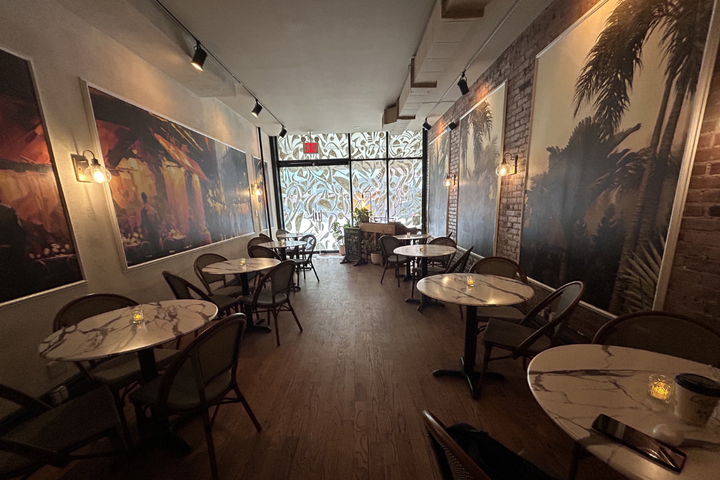
We have a ramp. We have had one since the day we opened. It sits inside the front door, and it goes out the moment anyone needs it. The cafe is a single room with a full glass storefront and a clear line of sight from the bar to the sidewalk. Nobody approaches our door without us seeing them.
The complaint listed thirty-five separate violations. Several describe things that don't apply to our space. Others describe interior conditions the plaintiff, by his own account in his own complaint, never reached, because he claimed he could not get inside the building.
That is not how someone who actually tried to enter an establishment writes a complaint. That is how a template gets filled out.
I Wrote My Own Motion
Hiring a lawyer to defend a federal lawsuit costs close to ten thousand dollars just to start. That is the retainer, before a single document gets drafted. The settlement demand from the plaintiff sits at almost twice that amount. We will come back to that.
I am not a lawyer. I read everything I could find, learned the procedure, and filed a motion to dismiss. I argued that the cafe was accessible, the alleged barrier did not exist, and the only relief available under the federal ADA is an order to fix something that was never an issue to begin with.
The motion was denied. Not on the merits. The judge denied it on a technicality: in federal court, a corporation cannot appear pro se. The judge stated on the record that the work I had done had been written "eloquently and professionally," and that the procedural issue had been missed because of the quality of the filing.
A federal judge complimented the work I had done as a cafe owner, and then sent it back because I am not allowed to present my own case.
That sentence captures most of what is wrong with this system.
I Went Down the Rabbit Hole
If your defense is going to cost more than rent, and the person suing you doesn't technically get any money, then where does the money go?
The plaintiff in our case has filed over 50 federal ADA lawsuits in the Southern and Eastern Districts of New York. He distributes those cases across at least three different law firms. His primary attorney has filed over 500 federal ADA cases since 2017, using 14 different rotating plaintiffs. The cases come in batches. Two, three, four lawsuits filed on a single day, against businesses in different neighborhoods.
The complaints are templates. We know this because in one filing, the wrong plaintiff's name appears in multiple places. A recycled document. A missed find-and-replace. Another was criticized in writing by a federal judge for its boilerplate nature.
The strategy is volume. They list everything they can think of and hope something sticks. Even if the original allegation falls apart, if a follow-up inspection turns up a mirror two inches higher than it should be, that becomes the new claim. The point is to keep the case alive long enough to force a settlement.
In February 2026, the same plaintiff filed another lawsuit against a business across the street from us, claiming visits that occurred weeks apart. He has not returned to our cafe in any of the time since.
This is not a person trying to be a customer. This is a litigation operation.
This is not a person trying to be a customer. This is a litigation operation.
What I Learned From Other Owners
Local business advocacy organizations produced nothing useful. It's funny how they always claim that they can help, until there is an actual problem. So I went into the public court records, pulled the docket sheets of the plaintiff's prior cases, identified the defendants who were located just a few blocks from us, and decided to stop by.

Same story, told back to me eight or ten different ways. Same plaintiff. Same lawyer. Same templated style. Same demand. Same calculation: settle for an amount that hurts a lot but is survivable, or hire a lawyer for an amount that doesn't hurt less and fight a case you might still lose.
Every business owner I spoke to had opened within the last year or two. Every one of them was an immigrant. None of us had any idea how to navigate the federal court system. Most were already several thousand dollars into legal fees by the time we talked. Several of them did not even realize they had been sued until the deadline to respond had already passed.
That is not an accident either. The targeting is precise. They focus on the businesses least equipped to fight back. New owners. Small balance sheets. First-time exposure to an American federal court. The model is designed to find people who will pay quickly because they don't know what else to do.
I tracked one case down through a counterclaim filing on a separate matter. An attorney in Astoria had represented another small business sued by the same plaintiff. He answered with sixteen affirmative defenses and a counterclaim that called the action vexatious and the plaintiff a non-bona-fide patron. The case settled less than a month later.
I want to come back to that. There is a lesson in it.
The Bigger Picture
Federal ADA Title III lawsuits filed in 2025: approximately 8,667. That number was 2,722 in 2013. Roughly half of all the website-accessibility lawsuits filed in the entire country in 2025 came from just 33 plaintiffs. In New York, a similar concentration applies to physical-premises filings. Restaurants and food service are consistently the most-targeted industry. Then small retail. Then everything else. This is not an East Village problem. It is not a New York problem. The pattern is the same across the country: the businesses being sued are the ones least equipped to defend themselves.
The lawsuits cluster in four states. California. Florida. New York. Illinois. Together those four states account for the overwhelming majority of all federal ADA Title III filings.
Why This Works as a Business Model
The fee provision in the ADA exists for a real reason. Most people who experience disability discrimination cannot afford to hire a lawyer to enforce their rights. Without fee-shifting, there would be no realistic way to challenge a non-compliant business. Civil rights enforcement in this country relies on private lawsuits because the government does not have the bandwidth to police every public accommodation in America. That is the right design.
But the same provision that lets a person with a disability enforce their rights also lets a small number of professional plaintiffs enforce nothing in particular for a fee.
Under the federal ADA, a winning plaintiff does not get money damages. They get an order to fix the barrier and reasonable attorney's fees. A winning defendant almost never recovers their own fees. That asymmetry is the engine. If you are the plaintiff's lawyer, every hour you spend on the case is a billable hour you will likely collect. If you are the defendant, every hour you pay for is a cost you will never get back, even if you win.
Industry trackers estimate that roughly 95 percent of ADA Title III defendants settle rather than fight. The reason is the math, not the merits.
A settlement that moves money from a small business to a law firm without producing any change in accessibility is not enforcement. It is extraction.
In other words, the only people actually making money from this whole system are lawyers, on both sides. And when settlements happen, if there ever was something wrong, it doesn't even get fixed.
The Voice From the Other Side
Some of the most damning critics of how this model actually works have been the people brought in to file the lawsuits in the first place.
In Albuquerque a few years ago, a wheelchair user answered a Craigslist ad and was hired to measure things like parking signs and dispenser heights at small businesses for fifty dollars per audit. When her measurements turned up technical violations, the lawyers attached to the operation filed suit. Over three months she became the named plaintiff on ninety-nine lawsuits. A federal court eventually ruled the cases malicious and frivolous. The lawyer behind them surrendered her license. She was left holding nearly forty thousand dollars in court fees the operation had promised to cover. Her quote, on the record, about the people who recruited her:
"I definitely do not think they are advocates for people with disabilities at all. I think they are scam artists."
She used the word we would not.
Some Courts Have Started to Push Back
Some federal judges have begun to write opinions calling this practice what it is. One sitting judge has called the conduct of high-volume ADA counsel a parasite disguised as a social engineer. Another has refused to admit website-only ADA cases. Several have started dismissing cases for lack of standing when the plaintiff cannot demonstrate a credible intent to ever return to the business they are suing.
New York federal ADA filings have dropped about a third since 2022. But the cases do not stop. They move. The firms that file them have shifted to New York state court, where standing requirements are looser.
The Astoria counterclaim case, the one that settled inside of a month, is the cleanest example of what fighting back can do. But fighting back requires finding the right lawyer, paying the retainer, accepting the risk of losing, and being willing to put a year of your life into the back-and-forth. Most small business owners cannot do any of that. The system is engineered so they can't.
The system is engineered so they can't.
What Would Actually Fix It
State-level reform, on its own, can't fix this. The ADA is a federal statute. A plaintiff blocked by a state-level pre-suit notice requirement can simply file in federal court instead. California has tried to address this, with a certified-inspector safe harbor program and a series of statutes targeting high-frequency filers. Filings in California are still climbing.
Arizona's state Attorney General secured the dismissal of 1,700 cases filed by a single attorney. A federal judge formally designated him a vexatious litigant. The State Bar disbarred him. That worked. It took over two years, and against one person.
Real reform of the federal ADA requires Congress.
In May 2025, Colorado became the first state in the country to build a formal cure period into its disability statute. A defendant who fixes an alleged barrier within 30 days, extendable up to 120, faces a 50 percent reduction in damages. Under the current system the plaintiff's lawyer gets paid whether the barrier is ever fixed or not. Under the Colorado approach, the lawsuit only matters if the business does not fix the problem. Unlike settlements, where you don't really have to fix anything.
If the goal really is to make spaces accessible, Colorado is what an enforcement system designed for that purpose would actually look like. It is brand new. We will not know if it is working for another year or two. But it is the first thing in the country that does not just create another revenue stream for the people running the lawsuit business.
The Thing Nobody Wants to Say
None of what I have written is an attack on the ADA. The ADA matters. Physical and digital access barriers are real. Disabled Americans face genuine exclusion every single day. The law was passed for a good reason. The fee provision was added for a good reason.
But just like most things, people find a way to exploit a system that was intended to help.
A small group of professional plaintiffs and a smaller group of law firms have built a private revenue stream on top of a civil rights statute. They identify businesses by neighborhood, run scans against websites, file templated complaints in batches, and collect settlements that almost never result in any improvement to accessibility for the disabled customers the law was meant to protect. The disability community is divided on this. The people inside the operations themselves call them what they are. Federal judges are starting to do the same.
And almost nobody is writing about it from the table where we sit.
So here we are.

We are located at 352 East 13th Street, between First and Second Avenue. The ramp is inside the door, where it has always been. We are open every day. Stop by, and if anyone needs assistance, just let us know.
If you have read this far and you are angry on our behalf, good. If you know a lawyer who can help us out, send them our way. If you know someone at a publication that should be writing about this, send them this post.
It's ironic that we built a non-alcoholic place, which if anything is about inclusivity of experience, and yet our future can be jeopardized by this.