Share
We Are Getting Sued, and It Is an Existential Crisis: Part 3
Enough venting. Here is what would actually fix this, and why no one will pass it.

Two weeks ago I told you what is happening to us. Last week I told you why none of the people you would call about it are going to do anything. If you have not read those, start there. This week, last one of these.
Enough venting. The reason this has not been fixed is that the argument got locked into one shape. If you think the current enforcement model is not working, you must want to humiliate people with disabilities.
The Subway
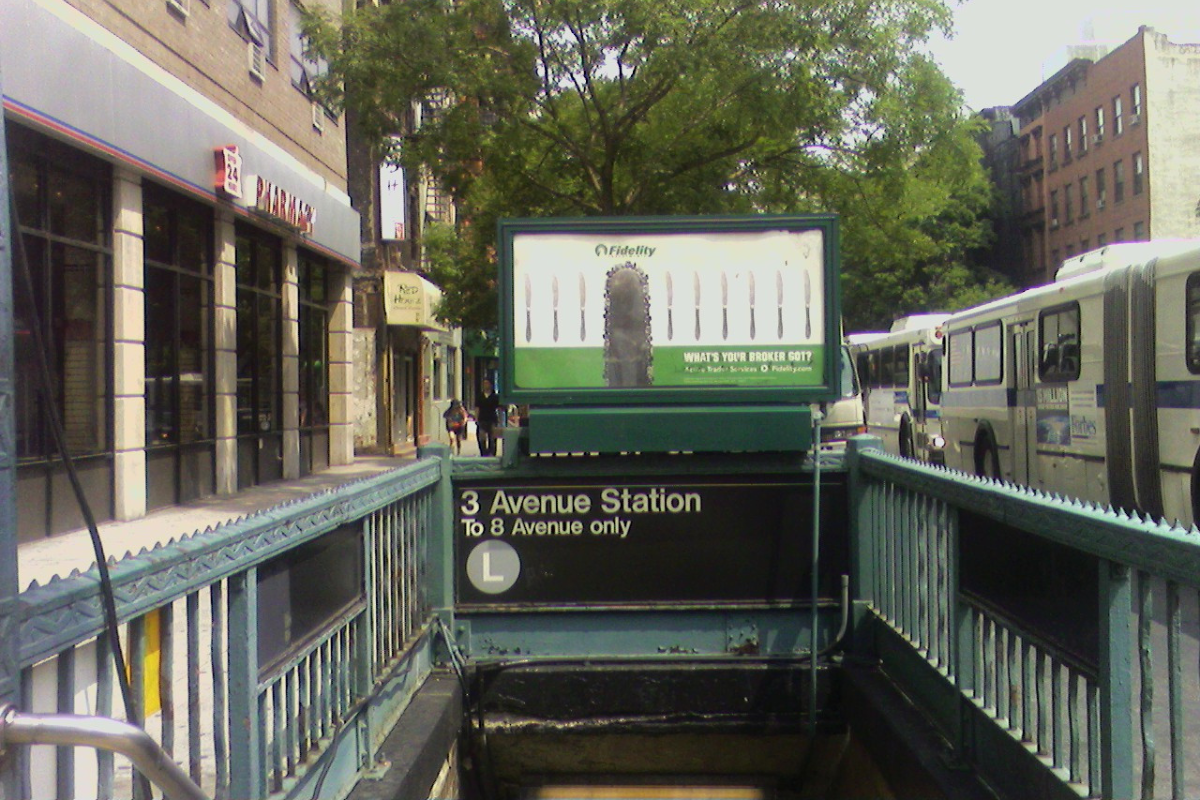
If the people fighting reform of the ADA were actually worried about disabled people being unable to access public spaces, the New York City subway would be accessible by now. It isn't.
The Americans with Disabilities Act was passed in 1990. Thirty-five years later, the New York City subway is thirty-one percent accessible to wheelchairs. Even that number is generous. The MTA counts a station as accessible if its elevator reaches a mezzanine, whether or not it actually reaches the platform. In 2023 the MTA settled a federal lawsuit and committed, under a court-supervised consent decree, to getting to ninety-five percent. The deadline is the year 2055. By then the ADA will be sixty-five years old.
In March of 2018, both senators from New York signed a letter, along with forty-one of their colleagues, pledging to block any vote on legislation reforming Title III of the ADA, "or any similar legislation." The letter is six pages long. The paragraph that has been used to kill every reform attempt since reads like this:
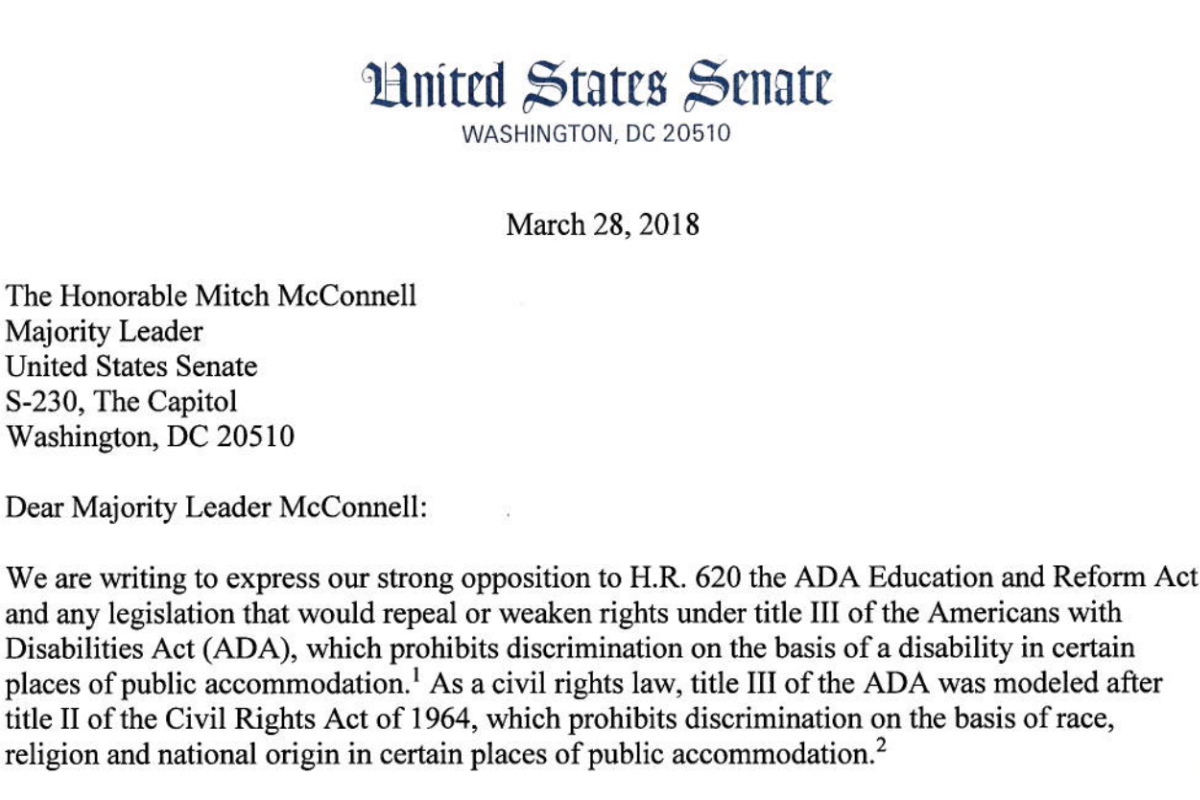
"There is nothing minor about a combat Veteran with a disability having to suffer the indignity of being unable to independently access a restaurant in the country they were willing to defend abroad. There is nothing minor about a child with cerebral palsy being forced to suffer the humiliation of being unable to access a movie theater alongside her friends."
It is beautiful language. It is also virtue signaling so polished you can see your face in it. The same senators who wrote those words preside, every working day, over a transit system that excludes wheelchairs from two thirds of its stations. They have never written a paragraph about the indignity of a combat veteran stuck on a sidewalk above a subway entrance. They have never called that humiliation. They have spent the last decade using the language above to block every effort to reform the part of the system that hurts small businesses, and zero hours of energy on the part they actually control.
The letter has nothing to do with disability rights. It is a moral shield. It is built so that anyone who says the current enforcement model is broken gets accused of wanting a veteran to suffer indignity or a child to be humiliated. That is not a policy position. That is an attack ad pre-written for a decade. If you disagree with how the law is enforced today, then you must hate people with disabilities. There is no room in this conversation to hold two thoughts at once: that the ADA is a vital civil rights law, and that the way it is currently enforced is not making anyone more accessible.
So I am going to hold two thoughts at once.
It is beautiful language. It is also virtue signaling so polished you can see your face in it.
If It Were About Accessibility
Accessibility enforcement should be standard, and about getting ahead of the problem, not reacting and punishing. A version of this already runs in another state.
California has had a Certified Access Specialist program since 2003, expanded under SB 1186 in 2012. A business that hires a state-licensed CASp inspector and gets a clean report earns procedural protections in any ADA suit that follows: a court-ordered stay, a ninety-day cure period, and the chance to fix what was missed before damages can be claimed.
California is also still one of the top states in the country for ADA lawsuits. That is not a contradiction. The CASp program is voluntary. The business has to find a specialist, schedule it, and pay for it out of pocket. Most small operators never do. The program protects the businesses that opt in. It does nothing for the ones that don't, which is most of them.
The lesson is not that California's program failed. The lesson is that prevention only works when it is the way a business opens its doors, the same way a fire inspection or a health inspection is. The version below makes it mandatory.
Here is what a New York version could look like.
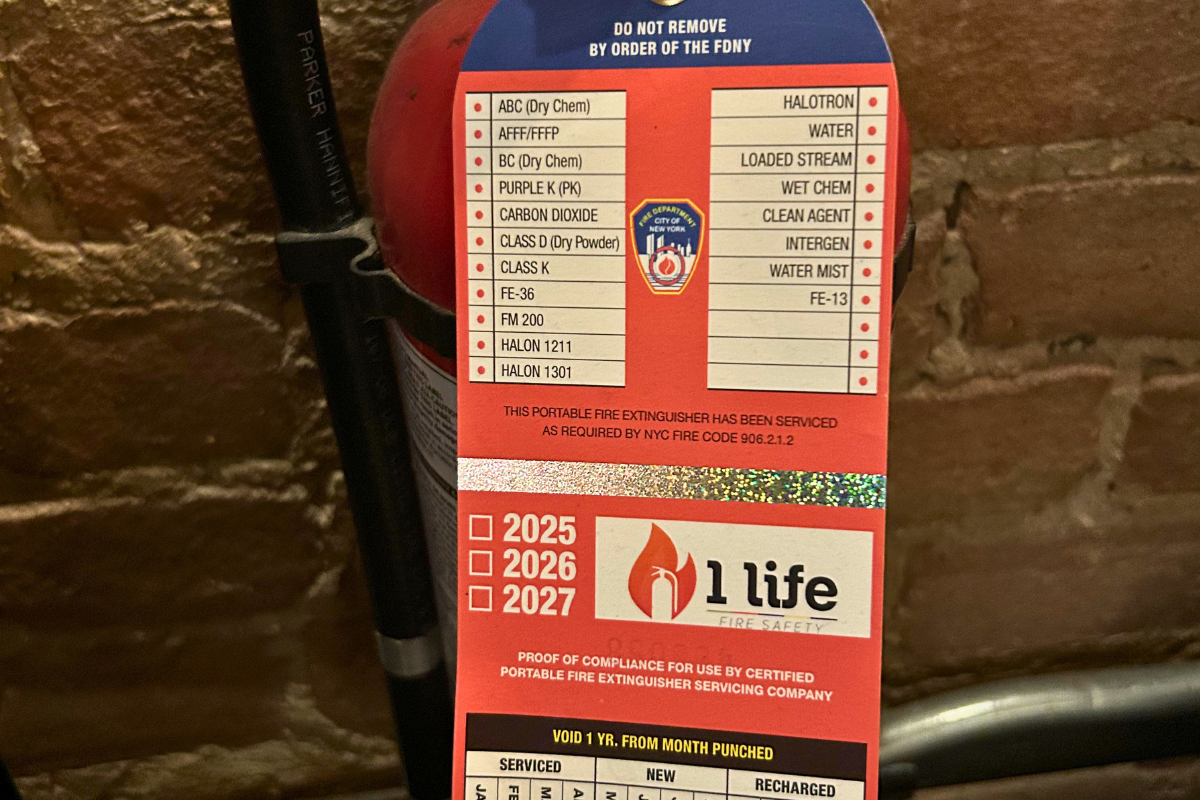
Every business open to the public in New York gets its physical space inspected before it opens. The inspector is a private contractor with a state license, the same way every fire-extinguisher technician, home inspector, elevator inspector, and CPA in New York already works. The state does not show up. A private inspector with a public credential does. They evaluate the business and either sign off, or tell you what needs fixing first.
The inspection is not pass-fail. It is a scaled point system, written with the disability community at the table, so a missing ramp counts for more than a mirror an inch too high. That is how the health department functions in every city. A missing trash can cover is not the same as spoiled seafood.
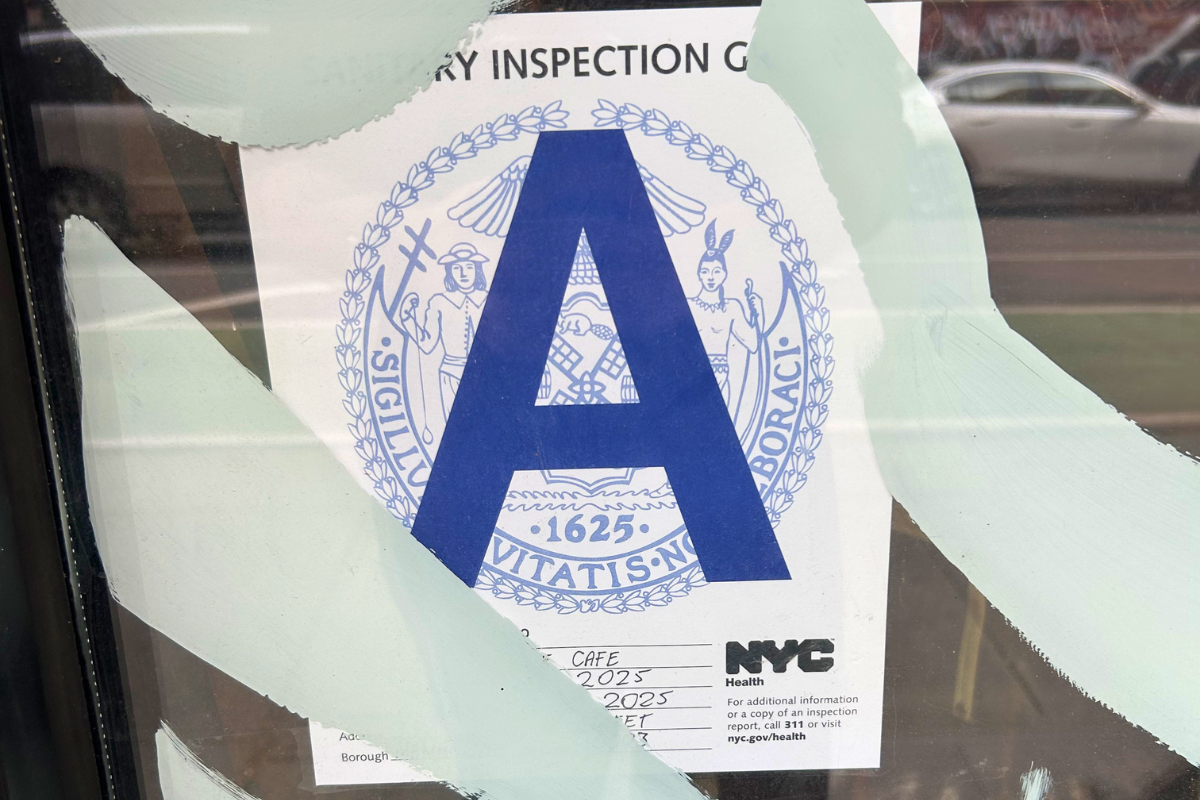
Pass the inspection with enough points and you get a sticker on the window. Fail and you have thirty days to fix what is wrong and pay for the re-inspection. The certificate is good for two years.
Websites get audited too. The technical standard already exists. It is called WCAG. Automated tools like axe and Lighthouse run an accessibility audit in any browser, in seconds. Pass the audit and you get a badge for your website. Fail and you have thirty days.
The inspector carries mandatory insurance filed with the state. If the inspector signs off on a space or a site that has a real barrier in it, the inspector can be sued, the company can be sued, and the license can be revoked. That is what stops the inspectors from becoming rubber stamps. The same exposure every fire-extinguisher servicer in New York City already operates under.
A business with a current sticker or badge is still allowed to be sued. The ADA still applies. A disabled customer who shows up and finds a real barrier the inspection missed has every right to file. But the lawsuit comes with one new rule attached. If you file a frivolous lawsuit and lose, you get stuck with the defendant's legal fees.
It is how civil litigation already works for everything else. Today, someone can file a templated lawsuit without ever being in an establishment, the establishment could be 100 percent compliant, and they can still collect thousands of dollars on a settlement without any potential downside.
Under this rule system, every place would be accessible, and it would eliminate any dishonest lawsuits.
At California's current voluntary volume, where roughly a thousand certified specialists serve a market of millions, a CASp inspection runs around seventeen hundred dollars. That is artisanal pricing. A mandatory New York regime would have the volume floor that commodity inspections need. Fire extinguisher service, boiler inspection, backflow testing, elevator certification, all already cost a small operator under three hundred dollars a year, because the inspector runs a route, not a forensic investigation. A mandatory accessibility inspection at scale would land in the same range. A few hundred dollars every two years for the space, fifty to a hundred for the website. One more thing a business needs to have and pay for regularly.
What we get for it: every public-facing business in New York that wants to operate is actually accessible, in the place and on the website. The disabled customer sees a sticker on the door, or a badge on the site before they arrive, and knows the place has been under inspection. The tens of millions of dollars currently moving from small businesses to law firms in settlements that fix nothing stop moving.
Places are compliant. Period.
Places are compliant. Period.
What It Would Take
If the ADA is the civil rights law its defenders claim it is, the whole system has to flip from punishment to prevention. Businesses should be accessible the day they open the doors. The law should not wait for a disabled customer to be excluded, and then a lawsuit to be filed, before anything happens. A statute that depends on lawsuits to produce compliance is not really enforcing accessibility. It is producing settlements.
Colorado passed a bill last May that some people point to as reform. It is just another cure period, thirty days to fix something after you get sued. It does not make a single business more accessible before a disabled customer walks in. It is the same kind of bill that has been failing in Washington for a decade. More of the same.
I agree with the ADA advocates on one thing. A cure period alone would not make any business compliant. Suing someone costs money and time, and without an incentive, no disabled person is going to bother. They are just going to go to a different place. That is exactly why this proposal does not rely on suing in the first place. The inspection happens at the door, before anything else.
A statute that depends on lawsuits to produce compliance is not really enforcing accessibility. It is producing settlements.
Why It Will Not Happen
If the goal is to make places accessible, nobody should disagree with this on the merits. It will not pass for two reasons. It is not really rocket science. Money and cowardice.
The trial bar has spent six and a half million dollars on New York lawmakers since 2022. That is the money. The cowardice is that every politician in New York already knows the attack ad waiting if they touch this. Anyone who proposes reforming the ADA gets accused of wanting a combat veteran to suffer or a child to be humiliated.
I walked through the worked example last week, the Long Island congressman who lasted five weeks on the federal version of this bill before the disability advocacy community broke him and he withdrew his name. Nobody in Albany or in the New York delegation wants to be that guy.
The bill that would actually fix this is not in front of any committee in any chamber, in any state legislature in the country. Because the only people losing in this scenario are the lawyers, and the lawyers fund the campaigns of the people who would have to pass it.
Money and cowardice.
Where This Leaves Us
In the first of these letters, I called this an existential crisis. It still is. We still have not figured out what is going to happen to us.
There are three options on the table, and they are all bad.
One. Take the loss, settle, and pay money we do not have for a problem that never existed.
Two. Pay money we do not have to take this in front of a judge, so we can at least feel less defeated about how it ended.
Three. Decide that running a non-alcoholic third space and a bottled cocktail company at the same time was always going to be hard enough. Close the physical location. Put everything we have into the bottles.
None of those three options makes a single disabled customer more able to access our bar than they already are. The accessibility was already done.
It feels like the price of doing business. Similar to when a mobster asks you for money for protection from themselves. The only difference is that now they come with a law degree instead of a gun.
The only difference is that now they come with a law degree instead of a gun.
Looking forward to next week, when I get to go back to writing about the current state of the non-alcoholic space. We will keep you updated with how this ends.
Stay with us as this unfolds.
If you want updates on how this ends, drop your email below.