Share
The Quiet Consolidation of Non-Alcoholic Drinks
The headlines are still about growth. The deals are about who gets to survive it.
On April 29, 2026, the Brooklyn-based brand St. Agrestis announced it had been acquired by The Wine Group, the California producer behind Cupcake, Franzia, and Concannon. St. Agrestis is the company that makes the Phony Negroni, the small ribbed bottle that has, over the last four years, become the default non-alcoholic cocktail in roughly every cool restaurant in New York.
The terms were not disclosed. The founders, Steven DeAngelo, Louie Catizone, and Matt Catizone, will stay on "for the near term," which is the standard way of saying they have a number of months left before someone else makes the decisions. Production stays in Brooklyn for one year. The Wine Group has already announced plans to add spritzes to the line.
The Phony Negroni sold 59,000 cases in 2025. Its two-year growth rate was 165 percent. It was, by most measures, the breakout independent non-alcoholic brand of the last four years. Launched in January 2022. Acquired in April 2026. 51 months from first bottle to exit.
The public record, in order
This is the most recent deal in a sequence that has been running quietly for almost a decade, and it has accelerated to the point where most people in the industry have stopped commenting on the individual transactions.
Seedlip. Distill Ventures, Diageo's corporate venture arm, took a minority stake in 2016. Diageo took majority control in August 2019. Ben Branson, the founder, distilled his first batch in 2015 and was no longer running the company four years later.
Ritual Zero Proof. Founded in Chicago in 2019. Distill Ventures took a minority stake in 2020. In September 2024, Diageo acquired the rest. Diageo's own release described Ritual as the sixth-largest non-alcoholic brand in the United States by value.
HOPWTR. Constellation Brands took a minority position through its venture arm in 2021. On March 27, 2026, Constellation announced it was buying the rest. The deal closed in April.
French Bloom. A French non-alcoholic sparkling wine started by Maggie Frerejean-Taittinger and Constance Jablonski. LVMH took a minority stake.
JoyBräu. A German functional non-alcoholic beer. Acquired by Oettinger.
The Zero Proof. A non-alcoholic e-commerce retailer based in the United States. Asahi participated in its Series A.
St. Agrestis. April 29, 2026. The Wine Group.
That is six conglomerates, in roughly four years, taking either control or a foothold across non-alcoholic spirits, non-alcoholic beer, non-alcoholic sparkling wine, non-alcoholic retail, and now non-alcoholic ready-to-drink cocktails. Three of those deals happened in the last twelve months.
The new part is who is buying
The St. Agrestis transaction is worth lingering on, because the buyer is the part that is new. Diageo, Constellation, LVMH, Heineken, Asahi: these are spirits, beer, and luxury companies that have been buying into non-alcoholic for years. The Wine Group is something else. It is, by its own release, the second-largest wine producer in the United States, and the St. Agrestis acquisition is its first significant move into the spirits category, alcoholic or otherwise. The wine industry, which has been losing volume to non-alcoholic for five years, has decided that if it cannot beat the category it will buy in.
The next acquirers will not all look like Diageo. They will look like the wine giants, the soda giants, and, eventually, the food conglomerates.
The other side of the ledger
In January 2026, Wilderton, the Oregon distillery that opened the country's first dedicated non-alcoholic production facility, announced it was winding down operations after nearly seven years. The founders cited a "historically difficult business funding and financing environment." Wilderton was a Distill Ventures portfolio brand. The same incubator that produced Seedlip and Ritual could not, in the end, keep its own brand alive. By then, the incubator was on its way out too. In March 2025, Diageo had announced that Distill Ventures would stop taking on new brands. The incubator that effectively created the playbook for institutional money in non-alcoholic stopped using the playbook.
The venture money followed. Through the first quarter of 2026, funding for online non-alcoholic beverage startups was down 97 percent year over year. $1.19 million across three rounds, against $39.3 million across twelve rounds in the same period of 2025.
The retailers ran into the same wall earlier. Boisson, the non-alcoholic-only store that opened locations in New York, Los Angeles, Miami, and San Francisco, filed for Chapter 11 in April 2024 after raising close to $35 million. Its founder, Nicholas Bodkins, said on the record that the company was "a failed venture-backed startup that grew too quickly, made mistakes, and wasn't able to find capital fast enough to continue to build three businesses at the same time." The eight stores closed. The brand survives as a wholesaler and a website.
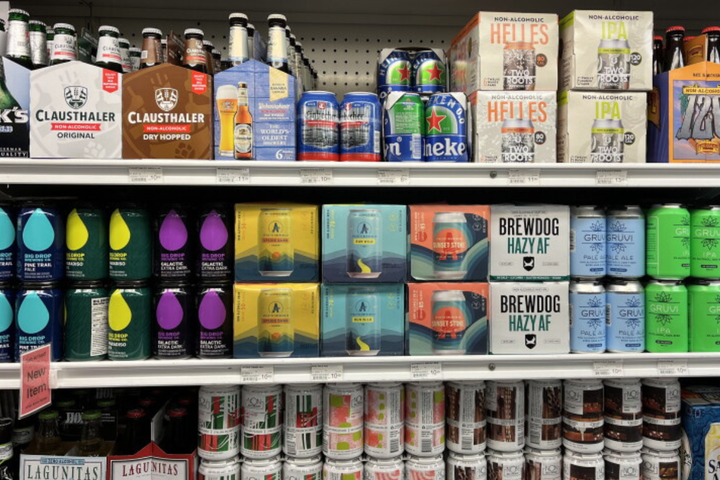
What this means, in plain terms: the shelf you walk up to in a bottle shop or a wine store is increasingly the shelf of one of five or six very large companies. The labels are different. The colors are different. The founders' faces still appear in the press releases. The cap table is not different.
The labels are different. The colors are different. The cap table is not.
That isn't necessarily a moral problem. Diageo putting capital behind Seedlip is the reason Seedlip is in every airport. Constellation buying HOPWTR is the reason HOPWTR will be in every gas station refrigerator in the country within eighteen months. The Wine Group buying St. Agrestis will put Phony Negronis in supermarkets that have never carried them. Scale is what conglomerates do.
The argument against has less to do with ownership than with what tends to happen to a product after it gets absorbed. The recipe stays. The packaging usually stays. The strange parts, the ones that made the brand interesting to begin with, tend to be the first thing softened. The line extensions become safer. The seasonal one-offs disappear. The flavor that was a little too bitter, or a little too floral, or a little too specific, gets adjusted toward what tests. None of this happens dramatically. It happens over three product cycles and you only notice if you were paying attention to the first version.
The interesting question, then, isn't whether non-alcoholic will keep growing. It will. The question is what the category will taste like in 2030, when the names on the shelf are mostly the same handful of holding companies that own the alcohol section two aisles over.
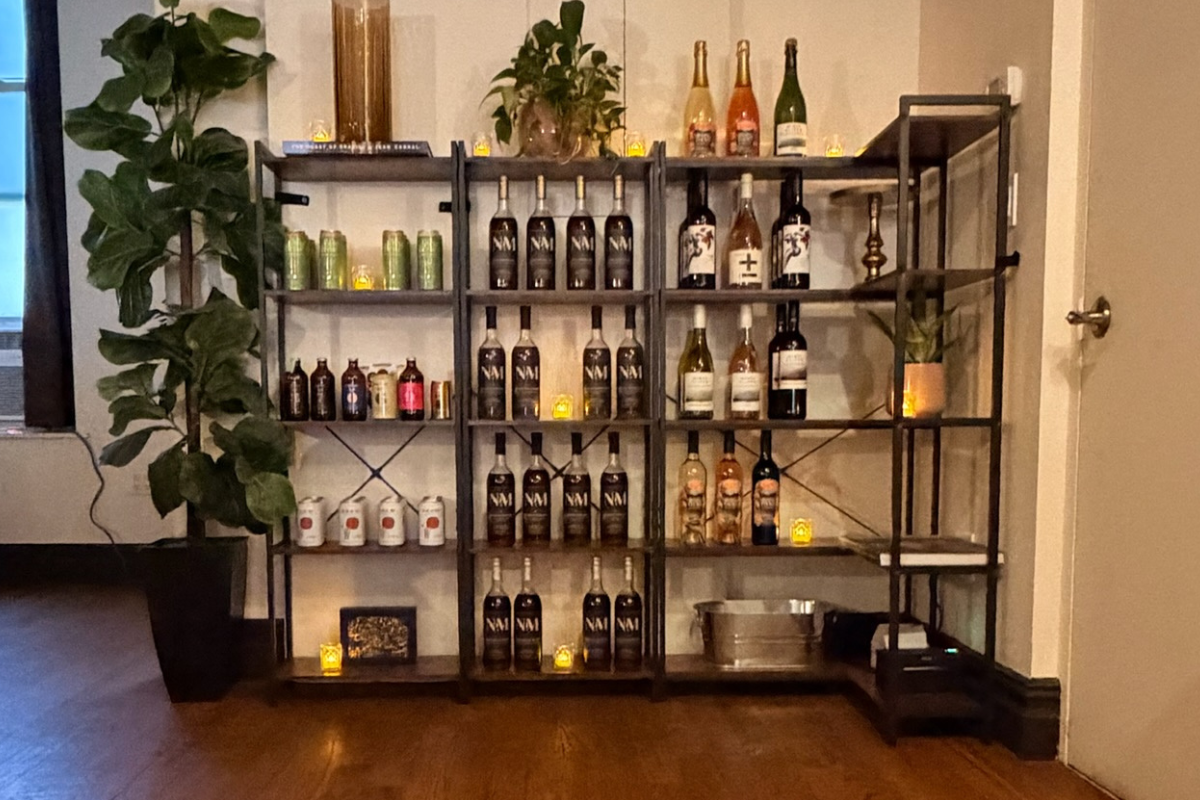
What survives a consolidation
What survives a consolidation is specificity. A real product made with real ingredients. A defensible reason for someone to choose it. A relationship with the people who drink it that does not depend on a marketing budget. The brands getting absorbed right now are, for the most part, the ones that were always going to need a larger balance sheet to mean anything. The ones still standing are the ones that meant something at their own scale first.
It is worth keeping a list, somewhere, of the brands that haven't been bought yet. Not as a manifesto. Just as a way of remembering what the category looked like before it was finished being acquired. That list will be shorter in a year. It is worth writing it down now.